African cuisine part 6: Southern Africa-Zimbabwe

zim 3
Zimbabwe is a landlocked country between the Zambezi and Limpopo Rivers, bordered by South Africa to the south, Botswana to the southwest, Zambia to the north, and Mozambique to the east. The country’s many ethnic groups and cultures, as well as the agricultural products produced in the country, contribute to the culinary tradition. In addition, the presence of British colonials also influenced the cuisine, as did neighbouring country South Africa. To understand the food Zimbabweans love, one must consider the geography of the country and the food the people produce.

Madora, or dried mopane worms, are
considered a delicacy in Zimbabwe.
(Source: https://www.chefspencil.com/
most-popular-foods-in-zimbabwe/)
Zimbabwe has ten provinces where different crops are cultivated depending on the climatic conditions of the area. There are seven terrestrial ecoregions, namely the Kalahari acacia–baikiaea woodlands, Southern Africa bushveld, Southern miombo woodlands, Zambezian Baikiaea woodlands, Zambezian and mopane woodlands, Zambezian halophytics, and Eastern Zimbabwe montane forest-grassland mosaic in the Eastern Highlands. Baikiaea refers to a genus of flowering plants in the legume family Fabaceae, while a halophyte is a salt-tolerant plant that grows in soil or waters of high salinity.
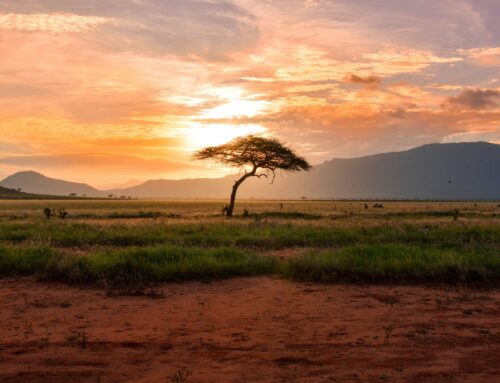
The country is mostly savanna, but the moist and mountainous Eastern Highlands support areas of tropical evergreen and hardwood forests. These trees include, among others, teak, mahogany, strangler fig, white stinkwood and knobthorn, while fever trees, mopane, combretum and baobabs are typical of the lowlands. Much of the country is covered by miombo woodland, dominated by brachystegia species native to tropical Africa. Numerous shrubs and flowers include, among others, hibiscus, flame lily, snake lily, spider lily, cassia, tree wisteria and Dombeya. There are around 350 mammal species, as well as over 500 bird species and 131 fish species, as well as numerous reptiles. Large parts of the country were once covered by forests with abundant wildlife but deforestation and poaching have reduced their numbers. Population growth and urban expansion, as well as use of wood for fuel have led to degradation and deforestation of woodlands, causing soil erosion and loss of fertility.Zimbabwe’s commercial farming sector was once a source of exports and foreign exchange and provided 400 000 jobs. Wheat and beef production fell, and the production of coffee, once a valued export commodity, came to a halt.
The International Crops Research Institute for the Semi-Arid Tropics has been assisting Zimbabwe’s farmers to adopt conservation agriculture techniques to improve crop yields. The principles of minimum soil disturbance, legume-based cropping and the use of organic mulch, which improve infiltration, reduce evaporation and soil erosion, and build up organic soil content, is slowly improving that.
-

- A basket of peanuts, which is a favourite snack and often used in cooked dishes. (Source: Pixabay)
-

- Mupunga Une Dovi, or rice with peanut butter, is a popular dish to eat with beef or chicken stew or a salad, or even as a teatime treat. (Source: https://www. chefspencil.com/most-popular-foods in-zimbabwe/)
Zimbabwean cuisine
Maize is a staple crop and forms the basis of ingredients for many dishes in Zimbabwe. Sadza is porridge made of ground maize that is made by mixing maize into boiling water and allowing it to simmer to make it thicker. It is a staple food that accompanies meat and vegetable stews. It can be prepared as sour porridge by soaking the meal in water for about three days to allow it to ferment. A thin porridge is made by adding it to boiling water. It is often used for infants or as an appetiser. When sadza is made with millet the result is a brownish porridge, also called pap, that can be moulded in the hand and eaten with whatever is on the menu. Mhandire is a snack consisting of maize cobs roasted over an open fire or boiled in salted water. Fresh maize grated from the cob is mixed with flour, sugar and salt, as well as baking soda, butter or milk, wrapped in maize leaves and either steamed in a pot of boiling water, or placed over hot coals.
-

- Fish, like Kariba kapenta are caught in Lake Kariba and either dried or cooked fresh as a protein-rich alternative to meat. (Source: Pixabay)
-

- The country is mostly savannah where fever trees, mopane, combretum and baobabs are typical of the lowlands. (Source: Pixabay)
-

- Zimbabwe’s rich and diverse plant species support about 350 mammal and more than 500 bird species. (Source: Pixabay)
Rice, pasta and potatoes, in the form of fries or mashed potato, are also part of the Zimbabwean cuisine. Mupunga Une Dovi, or rice with peanut butter, is an old favourite that goes with beef or chicken stew, a salad, or just as a teatime treat. Vegetables that are grown on smallholder plots usually include, besides maize, also beans like cowpeas, groundnuts, leafy green vegetables like spinach, as well as the leaves of pumpkin, squash or sweet potatoes. Leafy greens are sometimes made into a stew with tomato and onions that are eaten with sadza or as an accompaniment to meat, fish or poultry.
Mbambaira, or sweet potatoes are boiled and eaten for breakfast, deep fried or dried, ground and made into porridge. Mxan’a is a sweet soupy dish that consists of maize grains boiled with cantaloupe and sugar. It can also be combined with sweet potato or pumpkin. Nhopi is a made by boiling peeled pumpkin until tender then adding a bit of milk and some peanut butter for that nutty taste. Derere is made from okra leaves or pods that are rich in protein and apparently have medicinal value. Mufushwa is a dish prepared with leavy greens including the leaves of sweet potato or pumpkin, cabbage or even blackjack.
These are dried and stored and prepared by boiling and frying with tomatoes and onion. The dish has a yellowy-green tinge and butter, or peanut butter or even fresh cream can be added. Mutakura is made with grains, cowpeas and peanuts that are boiled and seasoned. Meat is eaten throughout the country, but the different cultures prepare the meat in various ways. For graduations, weddings, and other family gatherings, a goat or cow is usually killed and roasted.

Gango is a meaty dish containing a collection of chicken innards such as intestines, liver, and gizzards, or a combination of beef and pork with vegetables. (Source: https://www.chefspencil.com/most-popular-foods-in-zimbabwe/)
Although Afrikaners are a small group within the white minority group, Afrikaner dishes are also enjoyed elsewhere, including in Zimbabwe, Namibia and Botswana. Chimukuyu, or biltong, that is equally popular in South Africa and Namibia, refers to strips of spiced raw meat that is hung out to dry in the shade. In Zimbabwe, these are smoke-dried over and open fire in a traditional thatched kitchen. Boerewors is a long sausage made with well-spiced beef, pork or any other meat, and roasted over an open fire.
Gango is a meaty dish containing a collection of chicken innards such as intestines, liver, and chicken gizzards, or a combination of beef and pork with some vegetables. Guru or tripe is cooked over an open fire until soft before tomatoes and onions are added. Cow trotters is prepared in the same way until it forms a thick, savoury soup. Fish, like Kariba kapenta are caught in Lake Kariba and either dried or cooked fresh as a protein-rich alternative to meat. Kariba bream can be made into a soup with tomato and onion or battered with a mixture of flour and egg and fried in oil.
Madora or macimbi, are mopane worms that are considered a delicacy in Zimbabwe and other African countries. As the name indicates, these spiky, green, black and whitish caterpillars feed on the mopane trees that grow in the Matabeleland region and parts of the Midlands. The worms are squeezed clean of all its internal fluid before they are boiled, salted and dried out in the sun.
Source references:
Mabika, J (2021) Top 21 Most Popular Foods in Zimbabwe
https://www.chefspencil.com/most-popular-foods-in-zimbabwe/
Zimbabwe (2024) Wikipedia
https://en.wikipedia.org/wiki/Zimbabwe
Related Posts