African cuisine Part 10: East Africa – Uganda

timbuktu
Uganda, a landlocked East Africa country, lies in the African Great Lakes region in the Nile basin and has a varied equatorial climate. It is bordered to the east by Kenya, to the north by South Sudan, to the west by the Democratic Republic of Congo, to the south-west by Rwanda, and to the south by Tanzania.
The southern part includes a substantial portion of Lake Victoria, shared with Kenya and Tanzania. In 2024 the population counted nearly 46 million, of which 8,5 million live in Kampala, the capital and largest city. Uganda is geographically diverse, with volcanic hills, mountains, and lakes, including Lake Victoria, the second-largest freshwater lake in the world. The country’s natural resources include fertile agricultural land and untapped oil reserves, which both contribute to economic development. The service sector dominates the economy, and the rich biodiversity, with national parks and wildlife reserves, attracts tourism, another important sector for the economy.
Agriculture
Most areas of Uganda have a high rainfall and moderate temperatures, conditions that are favourable for continuous cultivation in the south, but only annual cropping in the north and northeastern corner where livestock farming is favoured. Main food crops include plantains and bananas, cassava and sweet potatoes, millet, sorghum and maize, as well as beans and groundnuts. Major cash crops included coffee, tea, cocoa, vanilla and tobacco in the past.
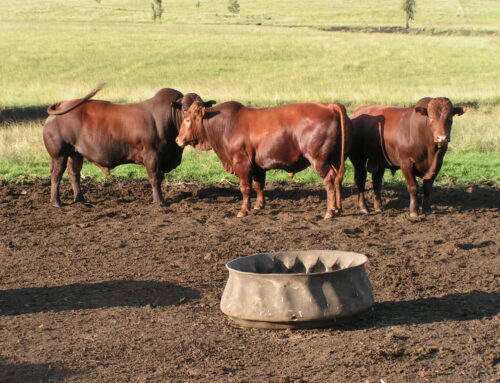
The natural environment provides good grazing for goats, sheep and cattle, with indigenous breeds like Ankole dominating. Smallholder farmers used to own about 95% of all cattle, but hundreds of commercial ranches were established during the 1960s and early 1970s in areas that had been cleared of the pesky tsetse-fly. By the late 1980s, the poultry industry was growing rapidly, relying in part on imported chicks from Zambia and Great Britian.
Ugandan Cuisine
Ugandan food is influenced by the agricultural crops, but is also influenced by English, Arab and Asian, especially
Indian, Chinese, French, and Italian food cultures. Dishes include beef and goat, as well as bushmeat, as well as chicken, pork, fish and soybeans that provide proteins. Dishes also include vegetables like leafy greens such as amaranth, and maize, potatoes, cassava, yams, rice and millet providing starch. Fruit includes mangoes, bananas and pineapples.

01 Traditional foods
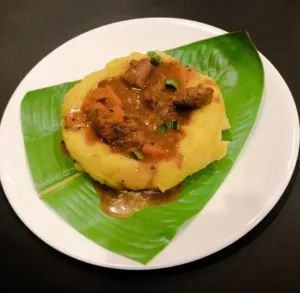

Posho or kawunga, known as ugali in Kenya, is usually made from maize but also other starches. Kwon, a regional
name for posho, is for instance made with millet. Chapatis (flatbreads) are made by mixing wheat flour, baking powder, onions, green pepper, carrots, salt and water, then flattening the dough into a pancake and frying it in a bit of oil in a pan or on a hotplate. Chapatis are eaten with beans or gravy, as a wrap for minced beef, boiled eggs, and
vegetables, or eaten on their own for morning or evening tea.
Chaloko is made with pinto beans, green peppers, tomatoes, and red or purple onions and eaten with posho. Namungodi are rice balls of boiled rice and mash potatoes, dipped into whisked eggs and deep-fried until golden brown and crispy.
Groundnuts (peanuts) are a staple and G-nut sauce made from it is probably the most commonly eaten sauce with smoked meat, fish or mushrooms, or mixed with leavy greens. The G-nut paste is a thick creamy sauce of sweet red peanuts.
Sim-sim (sesame) is another staple. Roasted sesame paste is mixed into a stew of beans or greens and served as a side dish. Sesame paste mixed with sugar or honey may also be served as a condiment.
Katogo consists of matooke (peeled green bananas) and a sauce of beef, groundnuts, offal, and beans or cow ghee or clarified butter.
Matooke refers to green bananas that is either boiled or mashed and steamed then cooked in or served with fresh beef, goat meat or fish, peanuts and bean sauce.
Luwombo is a beef, chicken, mushroom or fish stew steamed in banana leaves with vegetables such as carrots, potatoes, mushrooms, and peanut sauce. Chicken Luwombo is usually eaten with chapati, cassava, sweet potatoes or rice. Beef luwombo is prepared with beef, onions, tomatoes, green pepper, carrots, garlic, and sometimes potatoes and spices. Like chicken luwombo, it is also eaten with a starch.
Nyama chomo comes from the Swahili word for “roasted meat.” Muchomo can be made with beef, goat, chicken
or port and is eaten with steamed, unpeeled bananas, fresh salads, or potato chips or fries. Kikomando is a chapati or flatbread cut into pieces and served with fried beans.
02 Snacks

Roasted peanuts are often served in a paper cone. Samusa (samousa, sumbusa, samosa) are Indian samosas. Mugaati n’amaggi is an Arab dish consisting of wheat dough spread into a thin pancake, filled with minced meat and raw egg, and then folded into a neat parcel, before it is fried on a skillet or hotplate.
Nsenene is a seasonal delicacy of roasted locusts during the rainy season from November to April. The insects’ wings and legs are removed, and the grasshoppers are cooked in the grasshoppers’ natural oils.
Rolex is a chapati filled with eggs, onions, cabbage or kale, and tomatoes, with minced meat sometimes added. It is a favourite snack prepared along roadsides countrywide.
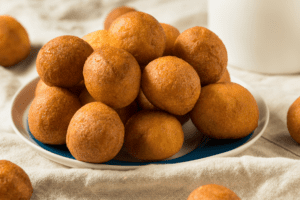
Mandazi is a Ugandan doughnut, or fried bread sweetened with coconut milk and usually spiced with cardamon, sugar and cinnamon. It is enjoyed with tea, juice or a fruit dip.
03 Desserts

Breakfast with Homemade Pancakes with Strawberries and Banana and Cup of Tea
Fresh fruits are commonly served as dessert, along with sim-sim made with sesame seeds and sugar, mandazi and
kabalagala or banana pancakes, usually made from very ripe ndizi (bananas).
04 Drinks
-
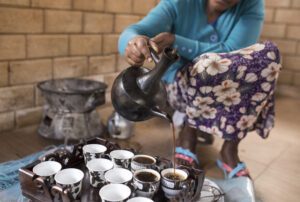
- Closeup of Ethiopian womans hands as she pours coffee in Ethiopian coffee ceremony.

Chai (tea) and kawa (coffee) are popular drinks and important cash crops. Pombe and lubisi refer to locally made fermented beer, usually from banana or millet. Tonto is a fermented banana wine, while obushera beverages are
types of traditional drinks made from fermented cereals. Waragi refers to distilled spirits or gin.
Related Posts