Prolapse in laying birds, part 1: Causes of prolapse in layers

Picture2
Prolapse in layers is a condition that occurs when a hen’s reproductive tract temporarily turns inside out to allow the hen to lay an egg, is unable to retract after the egg has been laid.
Prolapsed vent, also known as prolapsed oviduct, pick-out, cloacal prolapse or blowout, is a common condition in laying birds and has economic importance in the poultry industry. Prolapse is more common during peak production periods and periods of peak egg mass as a result of the large demand placed on birds’ metabolism during these times.
It may be resolved if attended to right away. If other hens notice the prolapse first, they may pick at the prolapsed vent which can cause severe damage to the hen and even death. The death of the chicken is often due to the trauma from other birds pecking the everted oviduct. Observation is key to preventing cannibalism and pecking behaviour. There is no cure for prolapse, so the best method of control is prevention.
Causes of prolapse in layers
Several factors may lead to prolapse in laying birds, and the most common contributing factor stems from incorrect pre-lay management practices. Essentially, this will affect the weight, composition, and body structure (skeletal development) of the birds. If the birds have not been reared properly, they may have poorly developed pelvic girdles.
In this case, the birds may prolapse despite their bodyweight being on target during production. Other factors to look at may include hormonal alterations, health status of the flock, overweight birds, age at the beginning of lay, too early light stimulation, unbalanced diets, production of double-yolk eggs, and all those conditions that favour the appearance of pecking behaviour also play a determining role in the presentation of prolapse. Let us look at these causes in a little bit more detail.
Weight and body structure of laying hens
Live weight, body development, and structure are highly related to the appearance of prolapse. On the one hand, underweight hens, that is birds that have not had an adequate growth during the first weeks of rearing, which is when the skeletal structure of the birds is determined, will have a poorly developed pelvic cavity, as well as insufficiently developed reproductive tissues and musculature for laying. On the other hand, overweight hens, with excess accumulated fat, will also be more prone to prolapse, since the tissues involved in oviposition (oviduct and cloacal musculature) will have less elasticity and tone, so that the oviduct will take longer to retract after laying an egg.
Good housing and management conditions during the first weeks of rearing, ensuring the recommended space allowance for good growth, as well as sufficient availability of feeders and drinkers to avoid competition that may negatively affect growth and uniformity, are essential in the prevention of prolapse. Also fundamental in obtaining adequate development is to be sure to use a slowly decreasing lighting programme, a sufficiently concentrated starter feed and maintaining a comfortable environment (temperature, relative humidity, and ventilation).
Although it is well known, it is always advisable to emphasise the importance of monitoring body weight weekly during the rearing period and ensuring that growth follows the recommended growth objectives for the breed. The objective is to always follow the reference growth curve for the strain, always bearing in mind that the development of the different body structures (such as skeleton, musculature, and gastrointestinal tract) follows a specific sequence in time, and it is not possible to compensate later for a deficit in the growth of any of them.
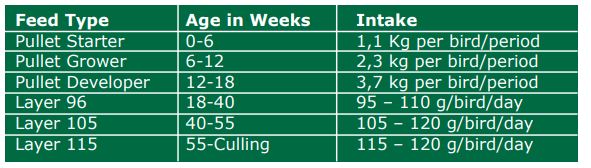
Table 1: Tiger Animal Feeds Pullet and Layer Feeds
Hormonal alterations in laying hens
Alterations in the hormonal status of laying hens can lead to prolapse. Low plasma estradiol levels have been found to be associated with the occurrence of prolapse in laying hens. Reduced plasma estradiol levels decrease prostaglandin synthetase activity, resulting in a decreased level of prostaglandin in the oviduct. Prostaglandin plays an important role in the muscular activity of the oviduct.
If levels are too low, smooth functioning of the oviduct muscles are affected negatively, and the hens become more prone to prolapse. Regulate the hormonal levels in laying birds by photo stimulation, considering the management, feeding, and lighting programme used during rearing as essential.
Health status of the flock
Some diseases can also act as risk factors for prolapse. Enteritis can cause diarrhoea, cloacal irritation, and dirty feathers around the cloaca, which will also favour pecking behaviour. On the other hand, inadequate intestinal health can negatively affect nutrient absorption and marginal deficiencies can occur in affected individuals. Other viral processes such as egg drop syndrome (EDS) and infectious bronchitis cause weakening of the oviduct. Endoparasites (worms and tapeworms) will alter the intestinal mucosa, nutrient absorption will be affected, and they are also a permanent source of stress, all of which are possible triggers for pecking.
-
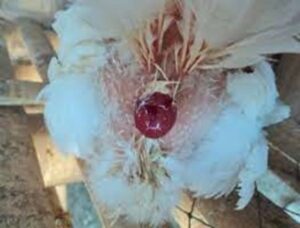
- Cloacal pecking and the cannibalism resulting from this behaviour, can be considered both a cause and a consequence of prolapse in laying hens.
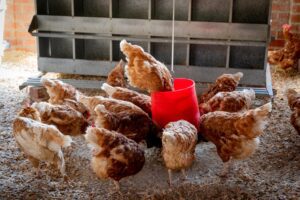
Overweight birds
In overweight birds, a lot of fat accumulates around the abdominal region and can narrow the egg passage, potentially resulting in the chicken straining to push the egg out, causing prolapse. Overweight birds are also more susceptible to prolapse because of muscle weakness and a tendency to lay larger eggs. Large eggs, like double-yolks, can cause the hen to strain too hard, pushing out more inner lining than usual. If a hen is regularly laying large eggs and straining, the cloacal muscles can become stretched, especially with older birds.
Age of the hens
Often the highest incidence of prolapse occurs around peak production, a time of high metabolic demand for the birds. As hens age, eggs naturally increase in size, but making this egg weight growth more flattened, as has been achieved through genetics in some strains, will allow the metabolic demand on birds in older flocks to be lower, reducing the risk of developing prolapse. Prolapse can also occur if the hen is too young and underdeveloped to be laying eggs.
Lighting in the pen
The light stimulus (photo stimulation by adding extra hours of light) should always be based on body weight and uniformity, never based exclusively on the age of the birds. An important effect of light is the alteration of the age of onset of sexual maturity of the birds, and of the appearance of the first eggs. It is important to keep in mind that it is not the intensity of light that will fundamentally affect the age of sexual maturity, but the change in the length of the day perceived by the birds (hours of light).
Chicks that receive a light stimulus before the reproductive tract is fully mature will be candidates for prolapse problems later in the laying phase. Flocks of excessively early birds will produce small eggs, but are undoubtedly more prone to prolapse problems, as the birds will have a small body structure and an underdeveloped reproductive tract. At the time of light stimulation, it is not advisable to be too aggressive, rather make it a gradual process that follows the recommendations of the particular strain regarding lighting programmes, light stimulation, and light intensity in each phase.
Unbalanced poultry diets
Unbalanced feed rations can also increase the chances of prolapse. Calcium deficiency in the diet can cause challenges with eggshell formation and can also lead to low muscle tone. Weak muscles can make it harder to retract the oviduct back into the body, which increases the time that the oviduct is exposed. Soft shell eggs can cause the hen to strain hard which also increases likelihood of prolapse. Tiger Animal Feeds produces pullet as well as layer feeds. The pullet feed is a balanced ration packed with all the nutrients to ensure weight management, proper body development and good health fundamental during the growth stage. Tiger Animal Feeds also produces three separate rations for laying birds providing them the needed nutrients to keep up production until the time of culling.
The ration will keep the flock at the right and uniform weight to reach a high peak and have persistence of production. The main nutritional factors to consider in formulas to help prevent the onset of prolapse are energy, protein, calcium, and phosphorus levels. Specifically, the use of a pre-lay feed such as the Tiger Feeds Pullet Developer is essential. This feed is properly formulated for the specific needs of this brief but essential period, as this is the time when calcium stores are established in the medullary bone, will help to reduce the risk of prolapse later in life. Keep in mind that calcium plays an important role, not only for the formation of the eggshell and strong, healthy bones, but also for the proper functioning of the muscles and the maintenance of muscle tone. Muscle weakness can hinder and delay retraction of the oviduct after egg laying and consequently prolapse can occur.
Ensure adequate calcium and phosphorus intake at each stage of productive life according to the egg mass produced to guarantee the proper functioning of calcium. Avoid rations that are too high in carbohydrates, oils, or fats as these will result in overweight hens. Instead, provide a balanced diet that allows the maintenance of body weight in the recommended range. The use of very high levels of protein will also potentially result in an increased risk of prolapse by encouraging the production of larger eggs. However, nutritionally stimulating the production of heavier eggs in markets that demand them should not be too much of a concern if it is done gradually. Finally, the role of fibre should not be underestimated in relation to the behaviour of laying hens. Fibre can have a very positive impact on intestinal health, which in turn results in better behaviour of laying hens, which will show less tendency to pecking.
Double yolk eggs
As a result of the excessive size of double-yolk eggs, a lot of pressure is placed on the uterus and cloacal muscles at the time of oviposition. When these tissues are overstretched, they weaken and the possibility of developing prolapse increases, as it becomes more difficult for the hen to retract the uterus. Proper management of the light stimulus at the right age and avoiding overly aggressive stimuli, either in amplitude or intensity, are the most important factors in avoiding excessive double-yolk eggs. On the other hand, genetic improvement can also help to reduce the incidence of prolapse by actively selecting against the appearance of double-yolk eggs.
Chicken behaviour
Cloacal pecking and the cannibalism resulting from this behaviour, can be considered both a cause and a consequence of prolapse in laying hens. When cloacal pecking occurs, cannibalism can spread rapidly and cause high mortality. Hens are attracted by the appearance of the exposed moist and shiny oviduct outside the cloaca after oviposition. Injuries resulting from repeated pecking and the presence of blood will further stimulate this severe pecking, further escalating the problem. Even hens that have undergone beak treatment or trimming can severely injure other members of the flock, as the exposed oviduct is a soft tissue that bleeds easily.
To prevent pecking in cage-free housed hens, ensure enough nests, allow dull lighting around and in nests so that other hens are unable to see the exposed cloaca when eggs are laid on the floor. Although prolapse can occur in all housing systems, cannibalism often occurs with greater frequency and intensity in birds housed in cages, as there is more interaction between the hens housed in the cage and less opportunity for the victims to escape the aggression. In the next part we shall discuss the identification and prevention of prolapse in layers.
For more information, contact Barbara Mulonda Simbaya, Technical Advisor at Tiger Animal Feeds by sending an e-mail to barbara. mulonda@tigerfeeds.zm or phoning (+260)969-202-207.
Related Posts