World-class Veterinary Academic Hospital at the University of Namibia is completing its final phase
Vet_main
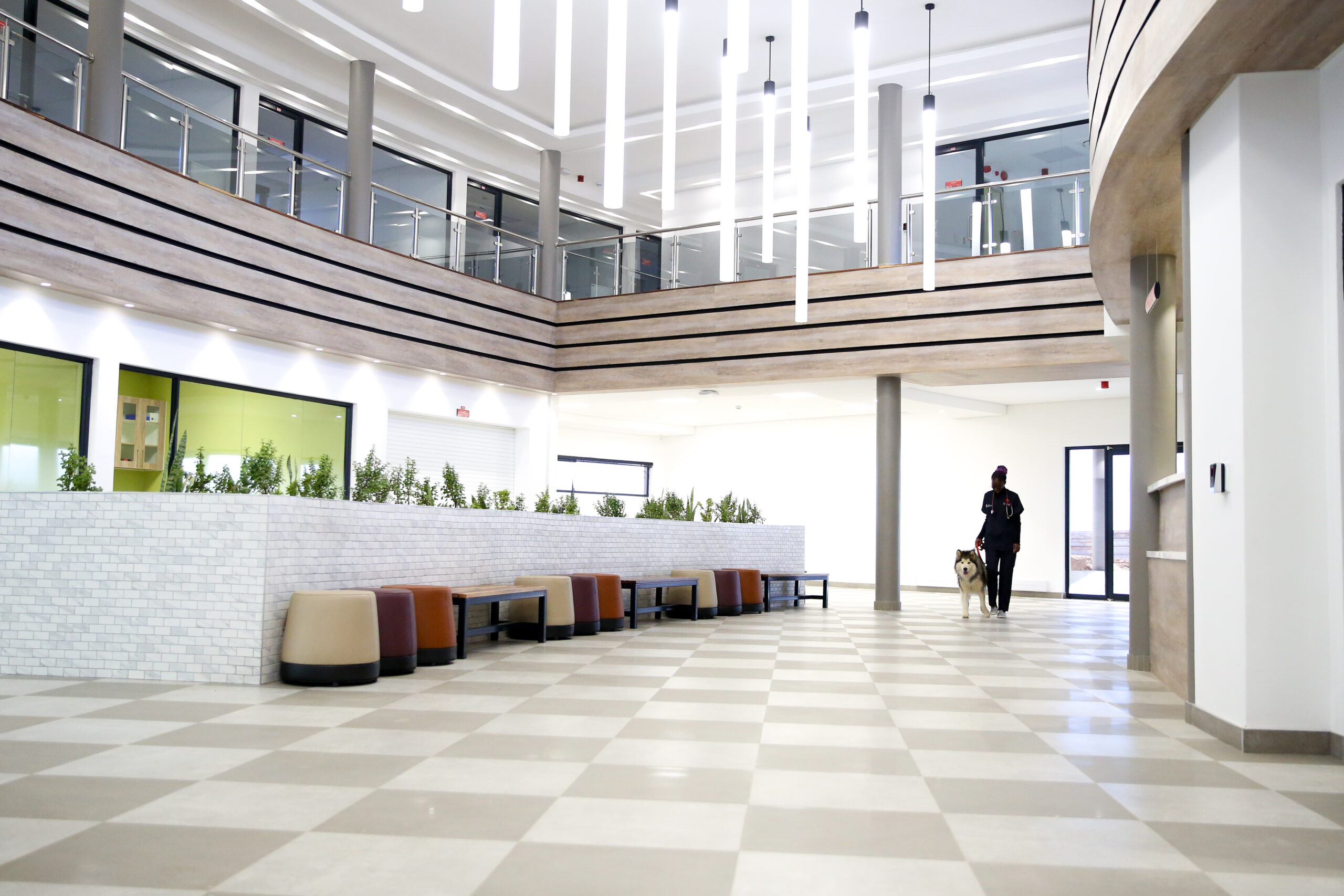
The University of Namibia’s (UNAM) Veterinary Academic Hospital (VAH) represents the transition from Namibia largely relying on established government and private veterinary services to training veterinarians locally and providing a dedicated university-based clinical teaching facility.
“The VAH was established in terms of the Veterinary and Veterinary Paraprofessions Act of 2013, which stipulates that a university that offers a veterinary degree must have a fully equipped and registered academic hospital attached to it,” says Dr Anna Marais, Associate Dean of the VAH.
“It is also an essential part of the clinical training of our students, who must meet a specified caseload in all species. It is unique because it is the first of its type in Namibia.”
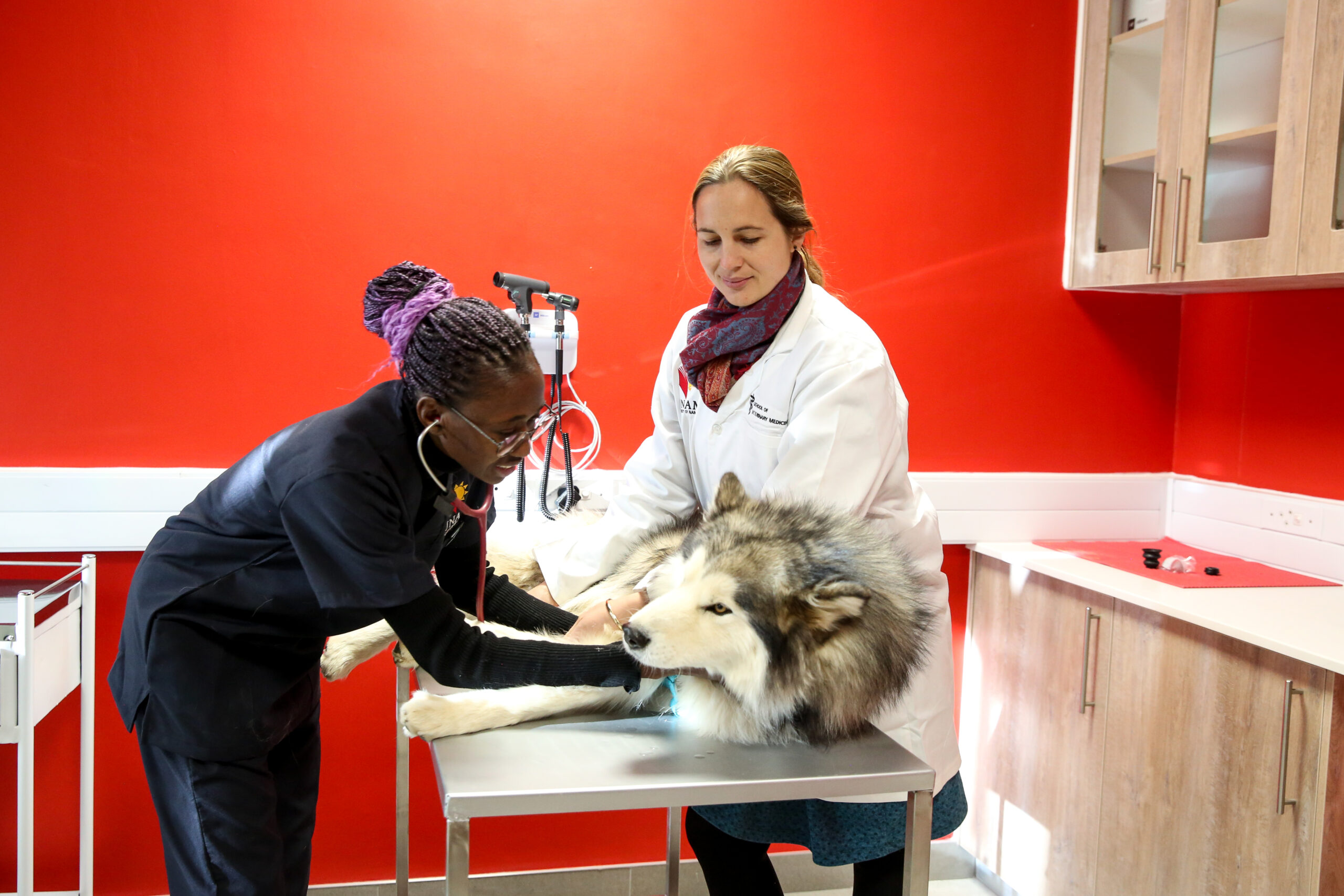
The hospital has five consultation rooms where senior students consult patients under the supervision of registered veterinarians.
Completion of valuable resource now in final phase
Now, UNAM is seeking about N$30 million to complete the final phase of the hospital.
“The small animal hospital was built in phases,” says Marais. “The final phase will be the completion of the surgical section comprising theatres (student theatre, orthopaedic theatre, soft tissue theatre), wards, a laundry room, a sterilising room, as well as a hydrotherapy and an intensive care unit), which will make the small animal hospital complete.”
She adds that the auditorium will be used for lectures and continuing professional development initiatives for both UNAM staff and other veterinary professionals in Namibia.
Marais says that UNAM has two registered hospitals, one for large animals on Neudamm farm and one on the main campus.
At the VAH’s Open Day on 7 August, the small animal hospital and the recent addition of a medical wing comprising an isolation ward and a medical ward with associated procedure rooms were showcased.
“We are immensely proud of this unit because it offers state-of-the-art services and facilities,” says Marais.
She emphasises that funding veterinary medicine education is a critical investment because it is also an investment in public health, as it promotes zoonotic disease control. “Veterinary professionals also act as the first line of defence in pandemic prevention,” Marais adds.
Indispensable nature of veterinary service and care
Speaking at the Open Day, Finance Minister Ericah Shafudah said that investing in veterinary medicine extends beyond education. She described it as a strategic investment in public health, agriculture and the economy.
Echoing Marais’ sentiments, she added that veterinarians play a vital role in controlling zoonotic diseases, preventing pandemics, ensuring food safety and protecting Namibia’s livestock export industry.
“Their knowledge and decisions will affect farmers, families, businesses and industries far beyond the boundaries of this campus. We are proud of the progress that has been made thus far.
“However, an institution of this nature is developed over time. Its infrastructure must grow, its technology must remain current, and its teaching, research and clinical capacities must continue to grow and improve,” Shafudah said.
Funding will be put to excellent use
Marais says the hospital has been funded by the African Development Bank and the Namibian Government and that funding will continue to the university as part of its allocation from the government. Private companies and partner institutions also regularly donate equipment items.
“The university will go out to tender this year still, and we expect completion within the next two years,” says Marais. “We base our design on the expectations of the Namibian Veterinary Council and follow guidelines of the World Organisation of Animal Health.
“The university is determined to provide a state-of-the-art facility which can be used not only by Namibia but by other partner universities in the SADC region for clinical training.”
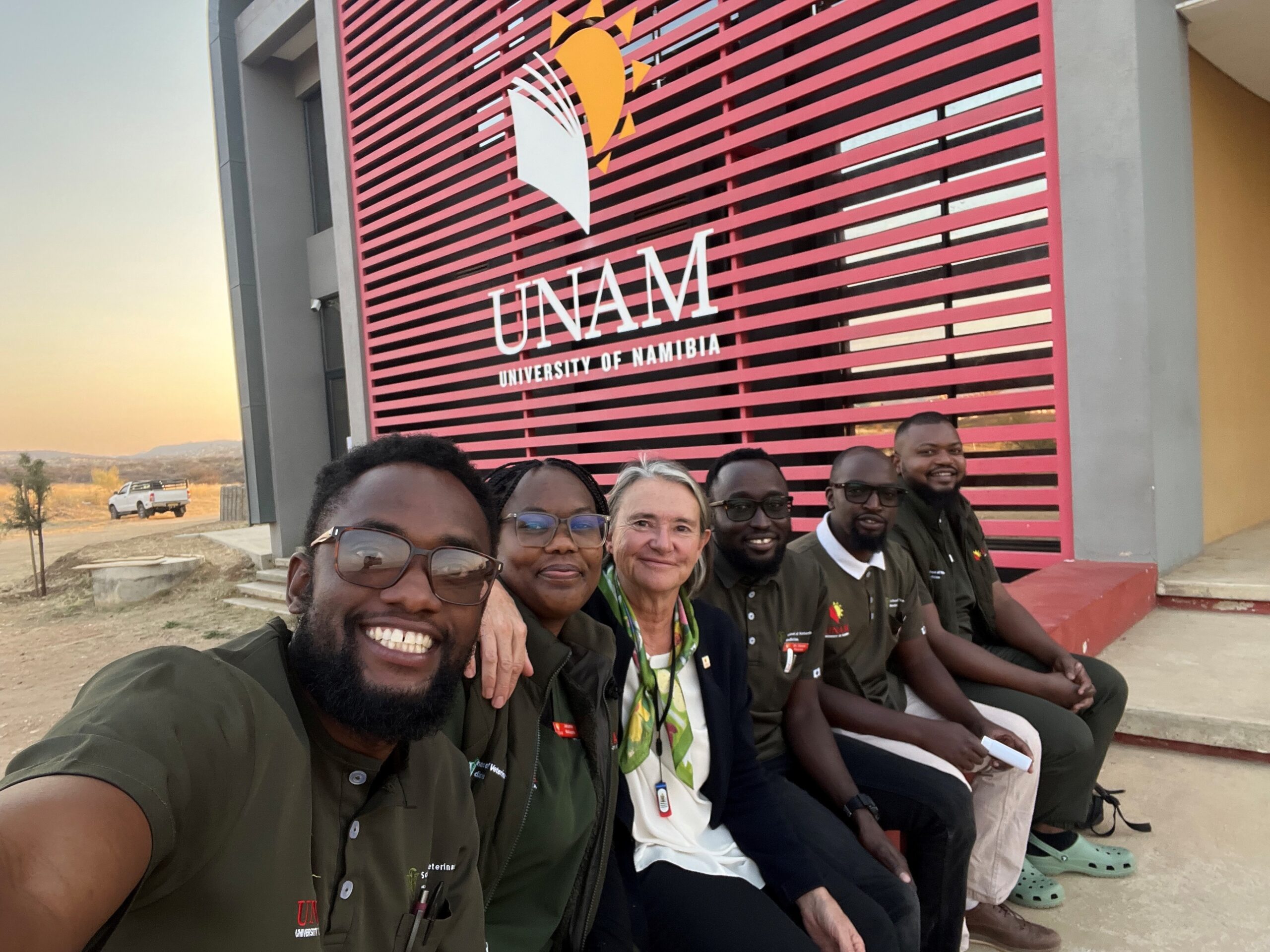
The team of Dr Anna Marais (centre), the hospital pharmacist and some of the UNAM veterinary postgraduate students.
Students are equipped with an unsurpassed skill set
According to Marais, students receive practical training first on models in a clinical skills laboratory before working on live animals. The laboratory allows students to practise procedures such as taking blood samples, listening to heart and lung sounds and performing surgical techniques.
“We have models for students to practice procedures such as venipuncture, intubation, catheterisation and auscultation. Namibian legislation requires additional training and competence for vets working with wildlife requiring the use of highly scheduled drugs.
“Our Veterinary Council has accredited the wildlife clinical studies modules as compliant with these requirements, and therefore our graduates are eligible for registration with this additional professional category. To this end, our wildlife training covers chemical immobilisation and physical capture of game during field attachments.

The student theatre has five surgical tables and anaesthetic machines, where students gain proficiency in surgery and anaesthesiology.
Marais says the degree is accredited by Botswana, South Africa and Namibia. At a recent audit conducted by the Namibian Veterinary Council and the South African Veterinary Council, the skills laboratory was hailed as an accolade.
“UNAM is very proud of and supportive of the hospital. The top management and the team of clinicians, nurses and paraprofessionals working at the hospital are dedicated and competent. Without this teamwork, we would not have been able to achieve what we have,” says Marais.
The hospital has recorded 14 439 patients, including more than 10 000 dogs, approximately 1 300 cats, as well as birds, cattle, horses, sheep and pigs.
For more information and funding opportunities, please contact Dr Anna Marais at amarais@unam.na or (+264)81-160-6647.
Related Posts