Planting thornless prickly pears as alternative livestock feed: Part 5: Prickly pears for human consumption – a hidden gem for local processing

Prickly pears side view on white and grungy grey background
Prickly pears side view on white and grungy grey background
Although prickly pears are produced in various parts of Southern Africa, the processing of this unique crop remains relatively limited. This presents a golden opportunity to develop a dynamic local agricultural industry, one that not only serves local markets but also attracts international interest.
What makes prickly pears particularly unique is that nearly every part of the plant can be used: from the fruit and leaves and even the flowers. Unlike many other crops where only one part is usable, the prickly pear is a complete, multi-purpose plant.
The prickly pear fruit itself is an oval-shaped berry weighing between 100 and 200 grams on average. Up to 70% of the fruit consists of juicy pulp, a true flavor bomb, but it also contains between 100 and 400 small, hard seeds per fruit. The component breakdown is roughly: skin (30–40%), pulp (60–70%), and seeds (2–10%). The seeds contain 7–15% oil, offering valuable potential for cosmetic or health products. Fruit colors range from white-green, yellow, and orange to pink, red, and deep purple, each with its own unique flavour and texture.
The amount of pulp and the size and number of seeds vary by variety. Although the skin is usually thin, it is rich in mucilage along with the pulp, an attribute that can be leveraged in food processing. Fresh prickly pears are delicious on their own, but the fruit also excels in processed forms such as juices, jams, fruit rolls, pickled products, and even liquid sweeteners.
One interesting aspect of processing is the high pH of prickly pears—between 5,3 and 7,1—which classifies them as low-acid fruits. To ensure bacterial safety, the fruit must be processed at temperatures of 115°C or higher.
Unfortunately, this high heat often results in straw-like flavours and unpleasant aromas. It is therefore important to use processing techniques that preserve the quality of the final product. Interestingly, green varieties typically have a better texture, sweeter taste, and more pleasant aroma than their orange or purple counterparts—a key consideration for producers and processors.
In countries like Mexico, not only the fruit is consumed but also the tender young pads (nopalitos), which form part of the daily diet. In South Africa and regions like Egypt, Ethiopia, and the Mediterranean, the use is mainly focused on the fruit. Yet there is so much more potential.
The possibilities for derived products are virtually endless: from jams, natural sweeteners, and fruit rolls, to soap from boiled pads and even floral arrangements made with the colorful flowers. Then there are the cochineal insects, which provide a natural red dye, popular in the cosmetic industry for products like lipstick and other makeup.

Nutritional and technological characteristics of coloured prickly pear fruit pulp (C. Saénz, 2017).
Prickly pear fruit
Prickly pears are also an important source of nutrients, with a nutritional profile similar to other fruits. The fruit is primarily water, with an average solid content of around 18%. Sugar content ranges from 6 to 14%, mainly in the form of glucose and fructose. Glucose serves as the brain’s main energy source, while fructose gives the pulp its sweet taste. Sucrose is mainly found in the skin.
Soluble solids above 16% make the fruit especially suitable for producing concentrated juices, dried products, and other preservation techniques requiring high sugar or low water activity. Pectin, a soluble fiber, contributes to product viscosity and is highly valuable in processing juices, marmalades, and jams, though not sufficient for jelly production. In terms of organic acids, prickly pears contain citric, oxalic, maleic, and succinic acid.
The fruit is also an excellent source of vitamin C, often in higher amounts than apples, pears, grapes, or even bananas, and boasts a good supply of minerals like iron, magnesium, calcium, and phosphorus.
Composition of prickly pear fruit:
Water: 85%
Sugars: 6–14%
Pectin: 1%
Protein: 0.35%
The fruit (skin, pulp, and seeds) is a good source of antioxidants, including betalains (the red-purple pigment), vitamin C, carotenes (the orange pigments), and phenolic compounds.

Composition of leaves.
Cladodes (leaves)
The so-called “leaves” of the prickly pear, technically known as cladodes, are actually modified, flattened stems with an oval to elongated shape. They are not true leaves; the actual leaves have evolved into spines, and the cladodes now perform photosynthesis.

In countries like Mexico and Chile, young cladodes are common vegetables in the daily diet, known as nopalitos. These juicy, tender stems can be enjoyed raw or cooked. Their chemical composition is similar to other vegetables, containing high moisture along with protein, carbohydrates, fiber, organic acids, minerals, and vitamins.
Cladodes are extraordinarily versatile and used in a variety of food products: sauces, salads, juices, pickles, treats, beverages, and even desserts. The young stems are mainly water and carbohydrate-containing polymers like pectin and mucilage, which give them a slimy texture that helps thicken certain dishes. Young cladodes can be glazed, pickled, or even served as side dishes.
These “leaves” also have value outside the kitchen. In traditional farming practices, they are used as natural remedies for sick animals and serve as a valuable energy source in animal feed, especially in drier regions.
Cladodes can also be dried and ground into a fine flour that contains an impressive 43% dietary fiber, ideal for health-conscious food products. Besides nutritional value, the plant also offers interesting industrial applications. The dried material can even be processed into paper, a sustainable alternative to traditional pulp.
One often-overlooked or discarded component is the mucilage, a polysaccharide and soluble fiber found with pectin in the cladodes. This slimy substance has great potential as a functional ingredient. In food processing, it can act as an emulsifier, replacing egg yolk in mayonnaise, and can even replace oil by mixing mucilage with vinegar. The result? A product with lower fat but the right texture and creaminess.
Various universities and research bodies, including the University of the Free State, are exploring the broader applications of mucilage. These include using it as a water-binder and stabiliser in dairy products like yogurt and ice cream, and as a thickening or gelling agent in sweets such as marshmallows and Turkish Delight. These innovations firmly position the prickly pear as a valuable plant—not only for food but also for functional and industrial products.

Orange fruit with carotenes.
Prickly pear seed oil
Even the tiny seeds of the prickly pear, which make up about 15% of the fruit’s edible portion, are full of value. These seeds are rich in oil with a unique fatty acid profile, up to 80% unsaturated fats. The oil is particularly high in omega-6 fatty acids, including linoleic acid, essential for cell health and various metabolic processes. The seeds also contain protein, making them ideal for both cosmetic and health applications.
Petrichor Naturals’ beautifully packaged prickly pear seed oil is the most expensive oil in the world and a unique product developed by siblings Abel Grobbelaar and Bianca Alberts.
A plant with natural healing power
The prickly pear plant isn’t just nutritious; it also boasts impressive health-promoting properties. For centuries, cactus parts – including cladodes, fruit, and flowers have been used in traditional medicine. Cladodes are known for treating stomach ulcers, while dried flower extracts are used for prostate and urinary issues.
More recently, scientific studies have started to confirm what traditional knowledge has long held: prickly pears are rich in phytochemicals like mucilage, fiber, pigments, and antioxidants, all important for promoting health. Nopalitos (young cladodes) have been linked to lowering blood glucose and aiding in weight loss.
Traditionally, the fruit has been used to treat a wide range of conditions—from ulcers, shortness of breath, and glaucoma to liver disease and fatigue. Fresh juice has even been used as a pain reliever, anti-allergic agent, anti-inflammatory, and hypoglycemic support.
Most promising are recent studies showing that cladode extracts can reduce hepatotoxicity caused by certain pesticides like chlorpyrifos. Other research suggests that prickly pear extracts may help protect against carcinogenic substances like benzo[a]pyrene and aflatoxins, supporting preliminary evidence of the plant’s anti-cancer potential.

Purple fruit with betalains.
Medicinal characteristics of prickly pears
Prickly pears are not just a valuable food source but also a plant with remarkable medicinal potential. Studies confirm the spineless wonder plant has a wide range of health-promoting properties, making it valuable in both traditional and modern medicine.
Most notable bioactivities include:
- Weight management
- Anti-inflammatory effects
- Wound healing (stimulating tissue regeneration)
- Antiviral properties
- Cholesterol reduction (anti-hypercholesterolemic effect)
- Anti-cancer potential
- DNA protection
- Anti-genotoxic effects
- Neuroprotection (supports nerve cells)
- Liver protection (hepatoprotective)
- Blood sugar reduction (hypoglycaemic effect)
- Anti-ulcer activity
- Lipid-lowering (anti-hyperlipidaemic effect)
These effects are attributed to a range of bioactive chemicals naturally found in different parts of the plant:
- In the fruit: antioxidants, vitamin C, flavonoids, betalains, phenolics
- In the pads (cladodes): chlorophyll, amino acids, flavonoids
- In the flowers: betalains and phenolics
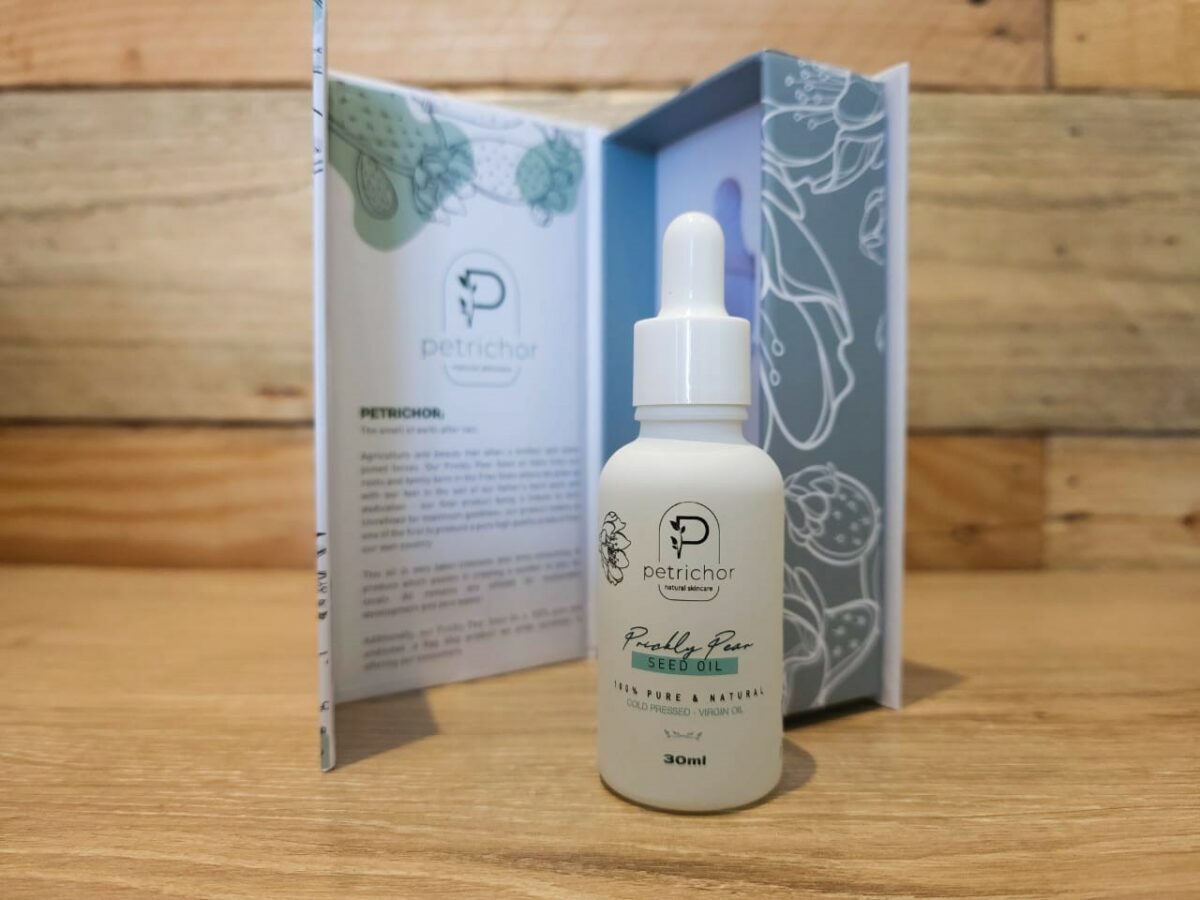
Petrichor Naturals’ beautifully packaged prickly pear seed oil is the most expensive oil in the world and a unique product developed by siblings Abel Grobbelaar and Bianca Alberts.
Summary
Prickly pears are gaining recognition worldwide as a multi-purpose crop that can be integrated into various sectors – from animal nutrition and food processing to cosmetics and pharmaceuticals. Its unique combination of nutrition, functionality, and health benefits makes it a plant of the future, not only for producers but for wellness and sustainability as a whole.
Prickly pears are far more than just fruit—they are a versatile, valuable plant with global application and local potential. For farmers, processors, and agri-entrepreneurs, this presents a chance to enter new markets and add local value. The key lies in understanding the plant’s composition, using the right processing techniques, and applying a little creativity.
Read more about Bianca and Abel Grobbelaar’s story at Petrichor Naturals on our website:
https://proagri.co.za/broer-en-suster-put-waarde-uit-turksvyplante/
Contact Petrichor Naturals:
 065-7238-252

Product enquiries: Bianca Alberts – bianca@petrichornaturals.com
Prickly pear planting stock: Abel Grobbelaar – mailto:abel@petrichornaturals.com| 082-431-8971
 Website: www.petrichornaturals.com
Related Posts