Meet the Starke Ayres stalwarts (and the season’s debutantes)

01
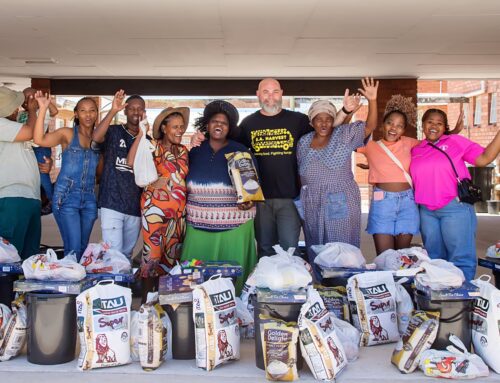
Pouring rain could not dampen enthusiasm for the Starke Ayres farmers’ days on their experimental farm at Bapsfontein. Deep mud prevented a hike through the lands, but all their products could be inspected in a large exhibition in a huge marquee tent. Farmers and product specialists could mingle, see, feel and discuss.
ProAgri also visited the tent, enquired, and this is what we unearthed:

CRISPY PEAR is a new sweet melon (spanspek) cultivar in the canary sweet melon category. It has firm flesh, a lengthy shelf-life and high sugar content. All varieties have resistance against the soil-carried fusarium disease and powdery mildew.

South Africans still prefer orange sweet melons and Starke Ayers has a large variety for planting through the year. Riaan Duvenhage, product specialist, says CYCLONE remain a stalwart for summer production and for spring and fall farmers may consider GOLDELIXER. A good choice for the winter is TOUCHDOWN.

Amongst the watermelons the biggest and most popular category remains the oblong All Sweet types. Riaan says the old stalwart, STAR 9906, is still available and remains popular. TURBO is a new, heavier variety, while SANTA MATILDE, a medium green with light stripes, is new on the market.
Starke Ayres also has a variety of seedless watermelons with ARAMIS producing the biggest fruit. Farmers may also consider the oval and somewhat lighter EMBASSY, or the slightly smaller variety, BOSTON.
In the longer daylight of the south CRIMSON SWEET remains a good choice; CARINA works better for die mid-season, and quick-growing AUDRY for the early season. There is also a new variety with extra big fruit – AKSENT. TIGER is very popular in the north because it yields 10 days sooner and is not so prone to damage by the sun.
Riaan says although the market still prefers big watermelons for the whole family, there seems to be a growing market for smaller watermelons that can fit into a refrigerator. In the personal series the small, round BOXY, between 4 and 8 kg, is popular with its firm and fragrant pulp.

Cobus de Beer is the carrot specialist and says SAMBA, with its deep orange centre, remains a good choice for the processing market, as well as CHRISTIANA and TATIANA; both germinate fast and grow quickly. A new variety, with extended disease resistance characteristics, is CA 758, which will soon be available commercially.
For the fresh market, as well as supermarkets with their variety of packing methods, the elegant SOPRANO is still the most popular variety. It is an excellent performer in various environments through the year. New varieties are SPEEDO – a quick grower, as the name indicates, and also SUBITO, which can be planted from February to the end of October. Both varieties have excellent uniformity and extended disease resistance.


Regarding beetroot, BT156 is one of the new experimental varieties that was introduced. Cobus de Beer says it is a perfectly round, deep red with a smooth skin, thin root but strong, not too thick, foliage attachment. For the specialist market Starke Ayres also offers a yellow and a candy-striped beet variety.

Gerhard de Beer introduceda new butternut, MELORA, aimed at the fresh market. It is smaller, easy to pack, very uniform and with excellent pulp quality.
SHIBA remains a stalwart. It can be sorted for the fresh market or for processing; the fruit weighs between 800 g up to 1,5 kg. Plant stand has an important influence on the size of the fruit.
GILDA is meant form the processing market, the fruit in block form; so there is less waste. KRISTA is also new on the market. At a stand of 12 000 plants/ha it will produce big fruit with deep orange centres for processing.

The pumpkin market is also divided between the bag and processing varieties. John Herbert, the product specialist, says farmers who pack by numbers in bags may seriously consider STAR 7022 and STAR 7028. These pumpkins have a big seed cavity and fills the bag quicker without making it too heavy.
If pumpkins are sold by weight, STAR 7026 is a better choice. The pumpkin is flatter but heavier, which means the grower packs more kilos per load. A new variety also complying with these requirements, is the very meaty *PK 268.
The new *PK 266, on the other hand, is specifically suitable for the fresh market. It has a small seed cavity and is not a very big pumpkin but is easy on the eye with a deep orange colour. Packed in slices, it has proved to be very popular on the shelf.
Tomatoes offer the biggest variety for open land cultivation and tunnel producers. The farmer’s choice will be determined by the disease characteristics, fruit size and yield.

Theo Bekker says STAR 9081 remains the saladette everyone wanted but experiments are under way for a successor with higher disease resistance.
STAR 9037 remains popular for the fresh market.However, a successor is also in the pipeline with higher resistance against fusarium and ToCSV.

Tunnel growers may look forward to two new cultivars – RENKA and *TF 3798, which will now be available commercially. Both have unlimited growth habit with vigorous growth, excellent resistance and yield, and performs better than others in tunnels.
*TF 4633 is a new yellow cherry tomato which will become available commercially in the wake of numerous requests. SAMANTHA remains popular because of its taste and *BR 5388 is a new cocktail tomato which is bigger than the standard cherry tomato. *BR5974 is a new fresh market tomato with robust growth habit and beautiful round smooth fruit.

VIOLET MOON remains the most popular egg-fruit (brinjal), an important reason being the fact that it has no thorns at its attachment point; so skins are not scratched with head-to-toe packaging. It is also slow in forming pips, ensuring that the pulp remains soft and palatable for a long time.

Amongst the sweet peppers Theo is very enthusiastic about DIVA. It changes colour to yellow and performs well in tunnels as well as outside. STAR 6657, which changes colour to red, is also an excellent choice with a sound health package for open land cultivation.
From supermarkets the demand remains high for smaller peppers to enable robotic packaging. The processing market, however, still prefer big peppers.
In the chili domain TRACER is in the process of settling in well against STAR 6604, especially because of its even darker green colour.

Pieter Venter highlighted the heads of lettuce MUSKETEER and WELLTON for summer growth. Both have good heat resistance. He says COMMANDER also performs well in the northern regions and, for the winter, growers can come and discuss PLUSKIN.
Amongst the speciality lettuces, a broad selection in both colours that can be planted right through the year, is becoming available, from acorn leaf varieties up to those with more curls and frills.
Pieter says KILIMO is a new, very uniform summer cabbage, which should be popular with the supermarket chains. SAPPHIRE and STAR 3316 stand out with good heat tolerance and excellent resistance against black stem rot.

In the speciality class the red cabbage, RUBY BALL, is the mini stalwart and RED QUEEN the medium-sized star. For green baby cabbages growers could consider PERFECTION CROSS and FAST CASH. Packaged together with the reds they make a pretty picture.
Amongst the cauliflower STAR 4418 is extremely suitable for packaging, and CROSSWAY will be the new winter cauliflower – it has a strong frame and excellent disease protection.
In the broccoli niche STAR 2204 is a good choice for growing through the year. TOPAZ, for the packaging market, will again be available next summer. Growers should talk to their representatives about the new winter varieties which could not be on show during the summer day.
Pieter Venter says breeding for genetic resistance against black stem rot remains a priority for Starke Ayers because there is no easy solution with chemical control.

Boerie Erasmus is the sweetcorn specialist, of which certain cultivars can regarded as popular as products from the sweets counter. ODYSSEY is a most popular new variety ensuring excellent quality and yield. ASSEGAI is a well-known stalwart that does well in summer and winter production for the fresh produce market.
Extended development work is in the pipeline regarding green beans. Runner beans, and a number of new varieties with excellent promise, are being evaluated presently.

Amongst the thicker beans – (8 to 10 mm) old stalwarts like STAR 2000 remains very popular for the processing market. STAR 2005 is a multi-purpose bean for processing in the fresh market and ensures outstanding yield potential.
STAR 2007 is a new addition to the range. This variety has a very concentrated crop with good gel retention. It is at present a favourite for processing and the fresh market.
Related Posts