Herd management part 5: Benefits of multispecies grazing

grazing 6
Usually, a one-wire temporary electric fence can hold cattle, but will not keep sheep and goats that need a five-wire system or the installation of another permanent or semi-permanent type of fencing. (Source: Pixabay)
Increased carrying capacity of pastures
Multispecies grazing may be one of the most biologically and economically viable grazing systems, especially on landscapes with diverse plant communities.
Multi-species grazing allows you to make the most of your land and pasture. When sheep are allowed to graze with cattle, it has been shown to improve cattle productivity by 20 to 25% and carrying capacity by 8 to 9%.
More than one species can graze at the same time on the same pasture, allowing the increase of pasture density without overwhelming it. While goats eat woody shrubs, invasive plants, weeds and forbs, cattle prefer legumes and common grasses.
When preparing to start a multi-species grazing system, it is better to start with low stocking rates at the beginning of the season and increase it as forage supplies allow.
When there is lots of forage, more feeder animals are needed when you keep a low population of year-round breeding animals. Instead of keeping mainly breeding animals, an alternative is to save some of the yearly capacity to feed young hogs, lambs, and cattle for the purpose of selling as needed.
Especially when starting out, it may be necessary to adapt the management of the grazing system. A sequential grazing strategy may look like this:
- Allow pigs to enter the early growth stages (late-stage 1 to early-stage 2);
- Remove the pigs and allow the pasture to recover until the forage is in stage 2 of development;
- Allow grazing animals like cattle or sheep to return plants to stage 1 of development; and
- Remove the cattle or sheep until forage is again ready for pigs (stage 1).
It is important to allow plants to regrow to the same stage of growth each time and to prevent weedy or unpalatable plants from taking over. This will improve the quality of the forage and make it more resilient.
Improved pasture health and ecological resilience
When grazing matches the pasture’s resources, it can improve pasture health. In general, pastures that are grazed by several different species tend to be more uniform and productive.
Grazing encourages the composition of the soil by replacing organic matter and rumen bacteria in the soil, speeding up natural nutrient cycles.
Better soil enhances the soil’s capacity to retain water and maintain and balance soil temperature. It minimises soil disruption and compaction that may lead to soil erosion.
Reduced parasite population
Parasite control is one of the most important advantages of multispecies grazing.
Distribution of gastrointestinal (GI) parasites across landscapes is closely related to the spatial distribution of hosts. In parasites with environmental life stages, the dynamics of the parasite can also be affected by the landscape and climate.
Multi-species grazing contributes to breaking the parasite life cycle. Cattle and horses do not share the same parasites as sheep and goats. Grazing cattle and horses with sheep and goats help to break parasite life cycles because the sheep and goat parasites cannot survive in the other species.
Sheep and goats can graze fields at the same time as cattle or horses, or one species can graze after the forage had an adequate rest period to allow regrowth.
The incompatibility of parasite larvae between species makes it possible for cattle to be grazed after or with small livestock like sheep, and goats to reduce larval infection rates.
In order to manage parasites, the height of the forage must also be maintained. Infection may be effectively reduced by allowing cattle to graze on the top of the grass and move them before they eat too deeply.
The key is to maintain a healthy herd or flock and encourage natural immunity through good nutrition, clean drinking water, and access to pasture.
-
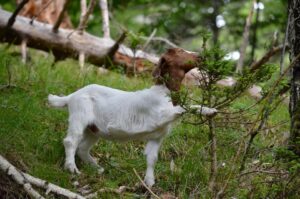
- Herbivores like goats have small, narrow mouths with the ability to selectively consume plants and plant parts with greater nutritional value. (Source: Pixabay)
-
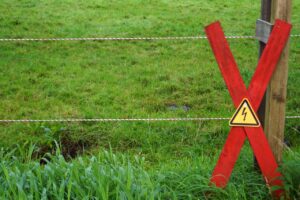
- In a multispecies grazing system, the fencing needs of each type of animal must be considered. (Source: Pixabay)
Mineral supplementation and copper toxicity
Defecation patterns of the different species influence nutrient cycling. While cattle avoid grazing eating near their dung, sheep, pigs, and chickens don’t mind the dung.
It is difficult to keep different types of livestock from eating each other’s mineral supplements. Sheep are sensitive to high levels of copper in the feed and supplements that goats and cattle eat, and if they have access to the same minerals, they may develop copper toxicity. They may also pick up tiny amounts of copper when eating the cattle’s dung.
To prevent this, animals can be allowed to graze one species on a paddock at a time. This method involves grazing two different kinds of animals in sequence. The sheep will be less likely to come into contact with dropped copper before it has time to become part of the soil.
Adequate fencing
In a multispecies grazing system, the fencing needs of each type of animal must be considered.
Usually, a one-wire temporary electric fence can hold cattle, but will not keep sheep and goats in the pasture. Instead, you’ll need a five-wire system or the installation of another permanent or semi-permanent type of fencing.
Woven wire or netted fencing will work well, but an electric fence is a good backup as it will also keep predators away from vulnerable livestock.
Fences should contain the smallest and the largest of the livestock. If you’re grazing goats with another species, your fencing system must be designed to keep the goats in.
Fences designed for pigs are usually suitable for sheep. Cattle will be fine on pasture and range with pig-proof fences if the fencing is tall enough for cattle.
It is important to remember that water sources must be protected from hogs damaging them and turning an area into a muddy wallow.
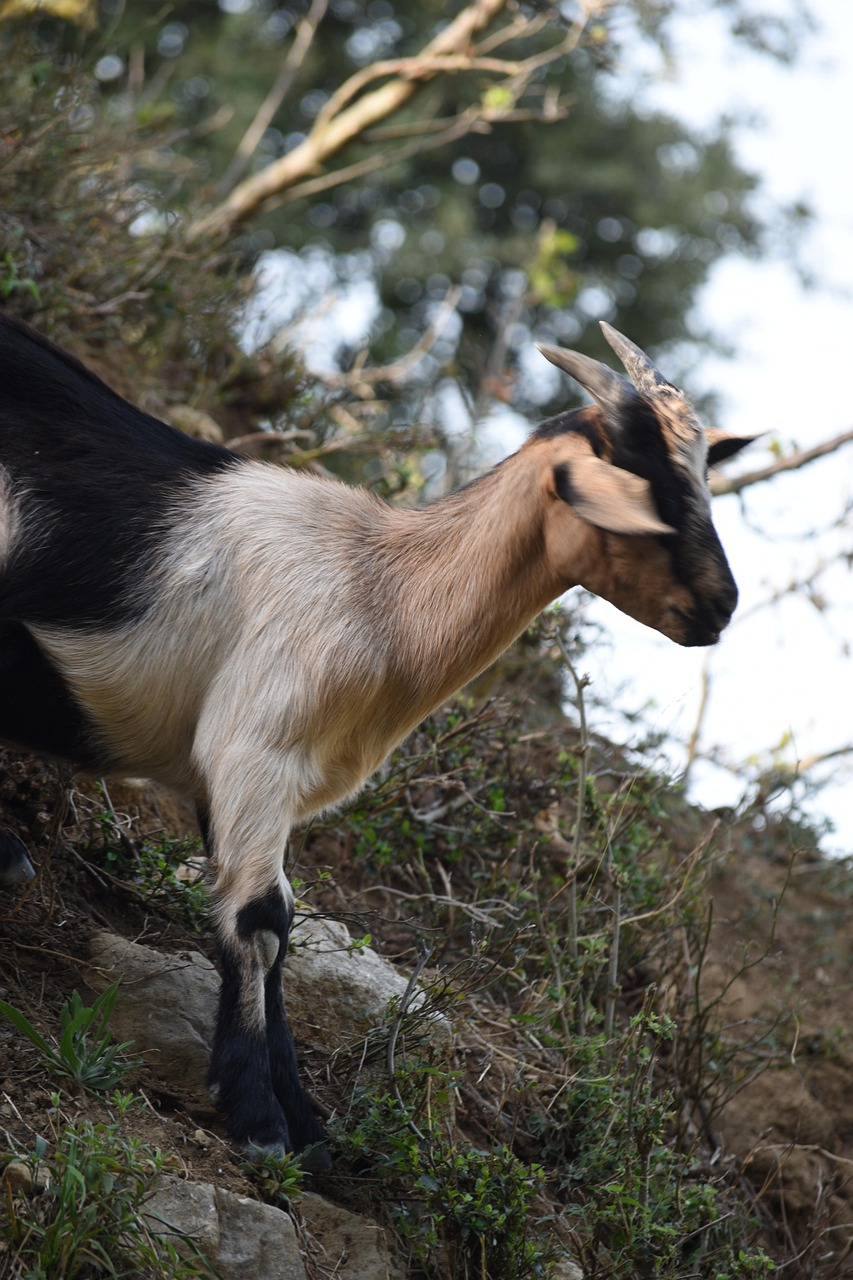
Goats are notorious escape artists, and they need a proper fence to keep them in. (Source: Pixabay)
Source references
Barkley, M. (2023) Prevent Parasites Through Grazing Management. Penn State Extension. https://extension.psu.edu/prevent-parasites-through-grazing-management
Rhonda (2022) Successful multi-species rotational grazing system. The farmer’s lamp. https://thefarmerslamp.com/multi-species-rotational-grazing/
Sip, O. (2023) Getting the most out of your pastures with multispecies grazing. AgProud.com https://www.agproud.com/articles/57998-getting-the-most-out-of-your-pastures-with-multispecies-grazing
Sun, P. (2017) The effect of rangeland degradation on gastro-intestinal parasite infections of Ankole cattle in the Mutara Rangelands, Rwanda. University of Rwanda. https://dr.ur.ac.rw/bitstream/handle/123456789/518/Ping%20Sun%20-Master%20thesis%20submitted%20to%20UR%20library.pdf?sequence=1
Related Posts