Focus on Rangelands & Pastoralists
pastoralists 1
A Turkana pastoralist with his goats in Turkana County, Kenya.Photo: Axel Fassio / CIFOR-ICRAF
The United Nations (UN) has declared 2026 the International Year of Rangelands and Pastoralists to raise awareness of and enhance the vital contributions of rangelands and pastoralists to sustainable agrifood systems, biodiversity preservation and climate resilience.
About half of Earth’s land surface is covered by rangelands, including grasslands, savannas and shrubland, deserts, wetlands and mountain areas.
Like rangelands worldwide, the African savanna, with its unique plants and animals are shaped by the movement of people and animals. The land sustains the livelihoods, nutrition and cultural identities of millions of pastoralists taking care of at least a billion animals. In Africa, animals include livestock such as cattle, sheep and goats, as well as wild animals (game). These animals contribute to food security, cultural heritage and local and indigenous knowledge. In addition, they preserve ecosystems and provide essential services, including water regulation and carbon storage.
Increasing pressure
Rangelands are increasingly becoming degraded due to factors that put pressure on ecosystems, such as climate impacts, including droughts, floods and soil degradation. Furthermore, animal diseases and competing land uses limit pastoralists’ mobility and their way of life.
According to the Director-General of the UN Food and Agriculture Organisation (FAO), QU Dongyu, the International Year of Rangelands and Pastoralists calls for collective action. “We must listen and empower women, youth, and pastoralist organisations to take part in the decisions that shape their lands and livelihoods. Too often, their voices remain unheard or ignored, and their contributions undervalued.
“We must safeguard rangelands through responsible governance, restoration, and investment and support the people who steward them,” he said, adding:
“Throughout this year, FAO will work closely with governments and all partners to advance work on rangelands and pastoralists under the overall objective of the Four Betters: better production, better nutrition, better environment, and a better life – leaving no one behind.”
A Turkana pastoralist with his goats in Turkana County, Kenya.Photo: Axel Fassio / CIFOR-ICRAF
Great green wall
In Africa, roughly half the continent south of the Sahara is dryland used for grazing. This dryland savanna stretches across the continent to the south of the Great Green Wall (GGW). The GGW refers to an initiative spanning 8 000 km of the Sahel-Sahara region, across 11 countries from Senegal in the west to Djibouti in the east. This initiative aims to combat biodiversity loss and desertification from the encroaching Sahara Desert by creating a living barrier of trees and vegetation that fosters biodiversity, enhances food security, creates jobs, and transforms people’s lives.
Mobile pastoralism
In this Sub-Saharan area, mobile pastoralism, or the herding of livestock, is increasingly recognised as one of the most sustainable food systems on the planet, particularly in drylands. As traditional migration routes to water
and pasture have become increasingly disrupted by agricultural expansion and infrastructure development, herders are forced to settle down. This causes pressure on the land, especially in smaller areas, leading to overgrazing and ultimately, to degraded landscapes that deepen poverty, intensify competition over resources, and fuel conflict.
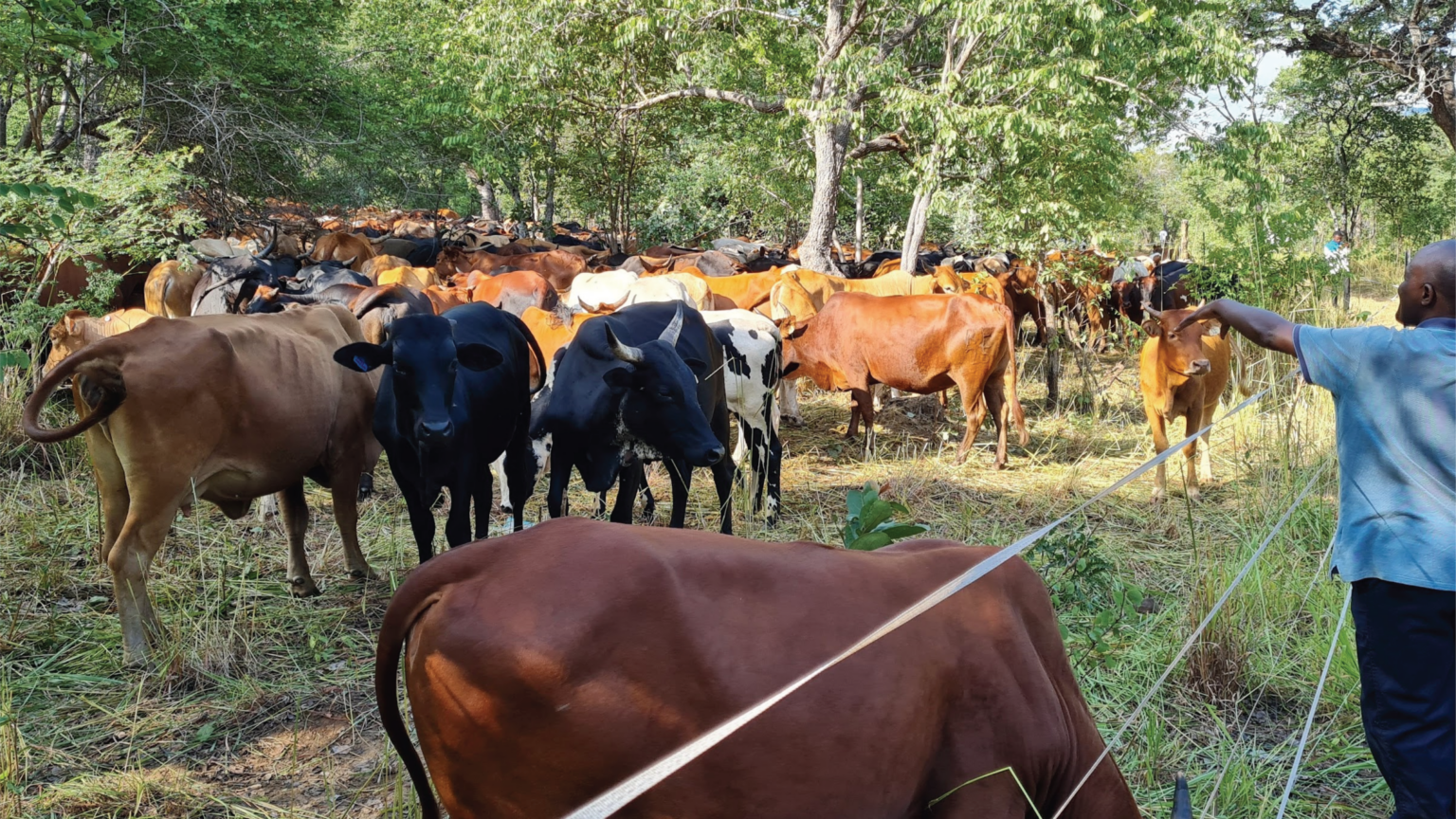
However, across the continent, livestock is becoming a force for restoration rather than degradation. New collective ways of moving and grazing herds are turning bare soils once again into productive grasslands that support food and water security, and boost incomes from livestock and tourism. A group of researchers, practitioners and civil society leaders recently examined how holistic grazing management, designed to mimic natural herd movements, can restore land and livelihoods.
Mimicking nature
These researchers found that well-planned holistic grazing could nurture the land instead of depleting it. Holistic grazing management is a new twist on traditional mobile pastoralism. Combined herds are densely packed in small addocks enclosed by fences andor herders, where the animals graze briefly before being moved on to the next paddock.
The animals leave freshly cropped and fertilised land behind, allowing it to recover so that, when animals return months later, the soil is covered with healthy grasses and perennial plants that re-establish themselves. This restored rangeland offers livestock a more diverse diet that supports natural self-medication. Also, ticks left behind when
the livestock is moved are starved, reducing disease risk.
The result is healthier soils, more resilient ecosystems, stronger livestock and pastoral communities that are better equipped to withstand climate shocks. “In nature, herbivores are kept densely bunched and constantly on the move by predators, a dynamic that has shaped grasslands for at least the last 30 million years,” explained Patrick Worms, Senior Science Policy Advisor at the Centre for International Forestry Research and World Agroforestry (CIFOR-ICRAF) headquartered in Nairobi, Kenya.
“This movement builds thriving grasslands and moves enormous quantities of atmospheric carbon deep into the soil. Livestock that wander freely in the same paddock for long periods overgraze the plants they prefer and fertilise those they avoid. But if we imitate nature, we can get productive pastures back. Livestock can be among the most destructive, and also among the most regenerative forces.”
Success across Africa
Across Africa, regenerative grazing is showing tangible benefits for people, livestock and wildlife alike. In Kenya’s northern Maasai Mara, the Enonkishu Conservancy has brought together 41 landowners to manage cattle collectively rather than competing over the same grazing patches year round. “We are doing conservation with livestock,” said Leshan Nampaso, a holistic grazing management trainer. “We restored bare soil to the vibrant savanna it once was. Wildlife returned, and the community now earns income from tourism as well as livestock. It is a triple win.”
Healthy rangelands act as natural sponges, absorbing rainfall and releasing it slowly over time. In Zimbabwe, a stream that had been dry since 1996 began flowing again after 30 months of holistic grazing, said Astrid Hueling, a consultant with the Participatory Ecological Land Use Management (PELUM) network.
In Zambia, Grassroots Trust noticed the doubling of cattle numbers, increased productivity and income and a reduction of the risk of dry-season fires.
“We are recovering traditional knowledge and building on it,” said Rolf Shenton, a Zambian conservationist and founder of Grassroots Trust. “Livestock becomes a restoration tool.”
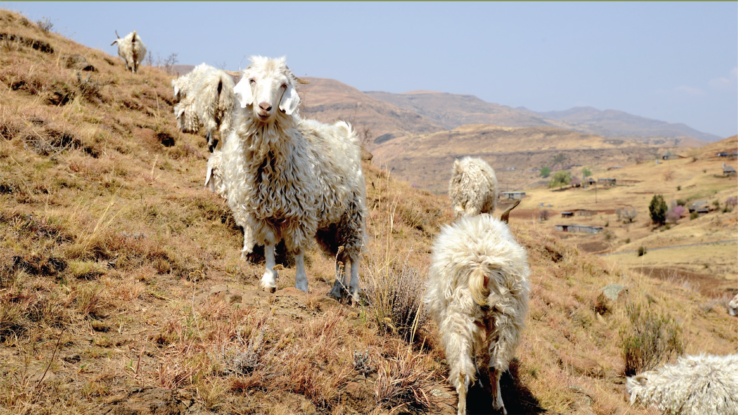
Goats graze on steep rangeland in Lesotho. Photo: Leigh Winowiecki / CIFOR-ICRAF
Success depends on people
By blending science with traditional knowledge, regenerative grazing has the potential to transform lands and livelihoods, help in restoring Africa’s rangelands and advance the Great Green Wall. Besides funding, the new approach will require a shift in governance reforms, behaviour change and sustained capacity building. It is important that sustainable grazing is rooted in community-led, participatory land-use plans that remain affordable and costeffective over the long term.
“Success depends on people, equipping local facilitators with practical, flexible, step-by-step tools to ensure communities can maintain their gains long after the projects have concluded,” says Jason Sircely, Senior Scientist at the International Livestock Research Institute (ILRI) in Kenya, which works for better lives through livestock in
developing countries.
Pallares, G. (2026) Dust to dividends: How livestock is restoring Africa’s rangelands Forests News https://www.forestsnews.org/156136/dust-to-dividends-restoring-africasrangelands?fbclid=IwY2xjawQE73tleHRuA2FlbQIxMQBicmlkETJxd0dpSUZmOXhQb2tzVVpnc3J0YwZhcHBfaWQQMjIyMDM5MTc4ODIwMDg5MgABHsbjxHV7AKfzuQ9D_rYndRaANtpM-7rUEnuPacfKqugLfhULczVvFcXESsTuP_aem_f8288pBhX-4wezdb3FzShzg (This is also the source of the photos.)
FAO launches the International Year of Rangelands and Pastoralists to strengthen these ecosystems and support the people who sustain them (2026) Food and Agriculture Organisation of the United Nations (FAO). https://www.fao.org/newsroom/detail/faolaunches-the-internationalyear-of-rangelands-and-pastoralists-2026-to-strengthenthese-ecosystems-andsupport-the-people-whosustain-them/en
Great Green Wall Initiative (2026) African Development Bank Group. https://www.afdb.org/en/topics-and-sectors/
initiatives-and-partnerships/great-green-wall-initiative
Related Posts