Climate change poses a huge threat to coffee farming in Tanzania

COF2_Tanzania produces world-class coffee
Coffee is one of Tanzania’s most strategic cash crops, with the sector supporting hundreds of thousands of smallholder farmers.
During the 2026 African Fine Coffees Association Conference and Expo held in Addis Ababa, Ethiopia, Tanzania was recognised as Africa’s leading producer of certified coffee after being ranked among the top producers globally, reaffirming the country’s growing influence in the international coffee market.
Frank Nyarusi, Director of Marketing and Coffee Promotions of the Tanzania Coffee Board, said: “According to a report by the International Continental Coffee Exchange, which was provided at the conference, Tanzania has ranked fourth in the world in the production of certified coffee.
“This great achievement is good news as it clearly shows that Tanzania’s coffee is a global brand. This report is the opportunity that we should use as a guideline to continue producing certified coffee in large quantities so as to boost the economy of individuals and that of the nation as a whole.”
Climate hovers clouds Coffee Farming
However, according to the Paradox of Climate-Smart Coffee (PACSMAC) project findings, climate change is significantly impacting coffee farming in Tanzania, increasing production costs, and reducing yields. PACSMAC Co-ordinator Professor Christine Noe, speaking on the project’s outcomes, said climate change has significantly disrupted coffee production, particularly for smallholder farmers calling for stronger policy support to sustain the industry.
“The intention is to support farmers through policy so that they can continue producing effectively, increase their incomes and contribute to national economic growth.”
She said that scientists under the project examined the coffee value chain in Tanzania and Ethiopia, focusing on policies and laws governing the cash crop, as well as market flows down to smallholder farmers. According to Noe, climate change has introduced multiple challenges, including increased costs for irrigation, pesticides, fertilisers and disease control measures, which were previously required at much lower levels. “Overall, production costs have gone up, while productivity has gone down.”
Neo noted that in northern Tanzania, many farmers have abandoned coffee farming as land sizes shrink and returns decline, making the crop less profitable. In contrast, farmers in southern regions such as Mbinga continue to expand cultivation due to the availability of larger land areas, although they still face similar climate-related challenges. International researcher, Professor Kristjan Jespersen, who is also a PACSMAC Coordinator, said that the impacts of climate change on coffee production are unprecedented.
“We are facing climate change impacts we have never seen before,” he said and added, “Wider engagement and a different approach are required to shape a more resilient coffee industry.” Meanwhile, Assistant Director for Policy Research and Innovation at the Ministry of Agriculture, Dr Adela Ng’atigwa, warned that coffee production is under serious threat. She said research has already shown that rising minimum temperatures in coffee-growing regions “have a significant negative impact on yields, with forecasts predicting severe production declines if no adaptation measures are taken”.
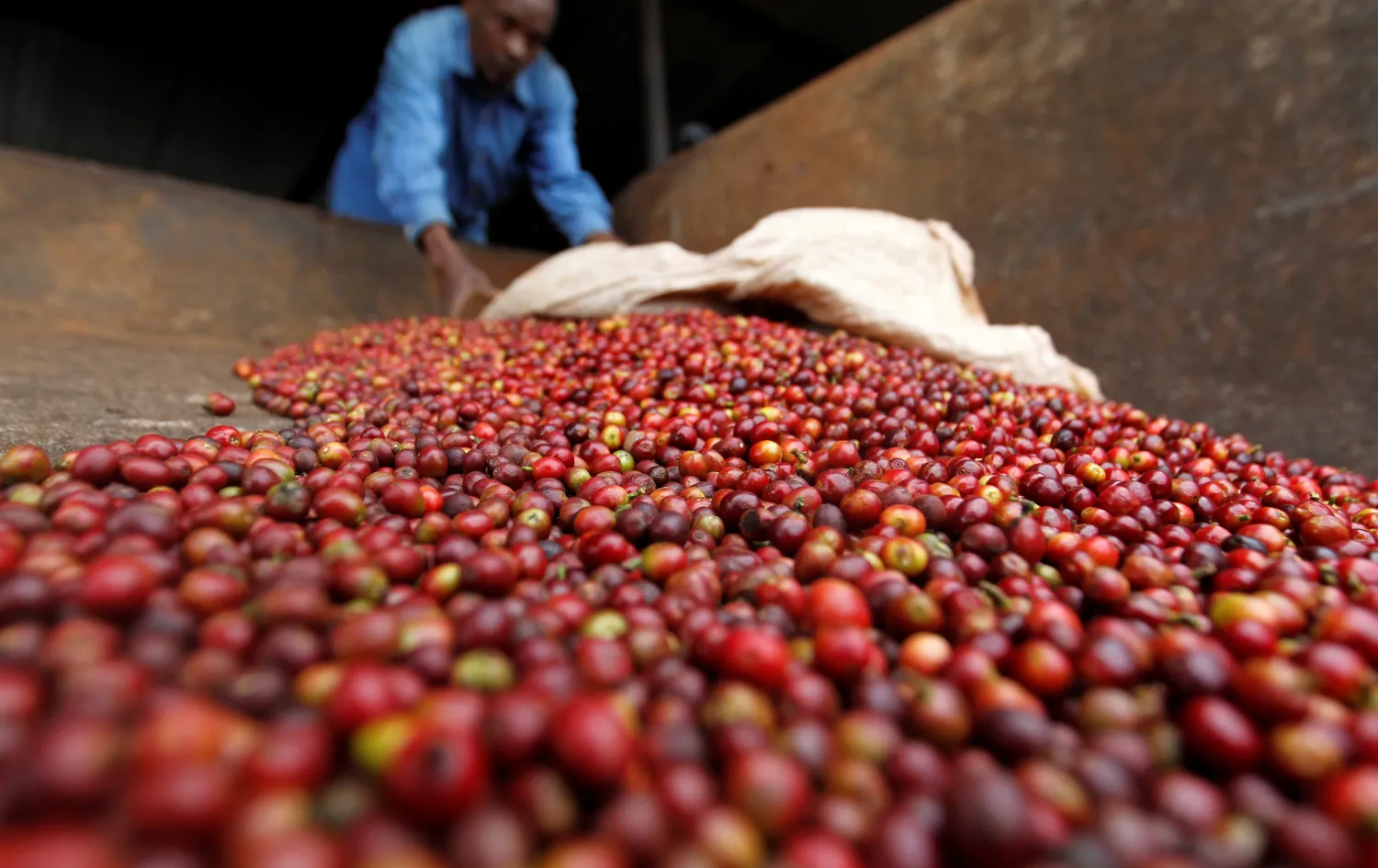
Coffee farmers in Tanzania are seeing lower production yields due to rising temperatures and other climate change effects. Photo: Reuters
Climate change mitigation and adaptation
In a study compiled by, among others, Neo, Ng’atiwa, Jesperson and corresponding author, Janina Grabs, Associate Professor of Sustainability Research at the Department of Social Sciences, University of Basel, the researchers discussed their findings in the study entitled “Resilience of what and for whom climate change mitigation and adaption in the global Ethiopian and Tanzanian coffee sectors”, published on the online platform, ResearchGate.
“Across the study areas, farmers told us about climate change affecting rainfall patterns to make them less predictable, which also affects their planting and farm management (e.g. fertilisation) decisions. Some regions have also recently experienced droughts, landslides and other extreme weather events – and we know that globally, extreme weather events are becoming more likely with climate change,” said Grabs.
“Additionally, pests and diseases associated with higher temperatures are expanding into coffee regions where
they were not widespread before, threatening yields and putting additional strain on farmer livelihoods.” Grabs said the scholars found that between 76 % and 89 % of surveyed farmers rely on coffee as their main income source. “A major exception to this trend is farmers that we surveyed in the Kilimanjaro region of Tanzania, which used to be a major coffee-producing region but has come under pressure from climate change and urbanisation. In this region, most farmers have switched from earning their main income from coffee to grains and food crops, including bananas, as well as off-farm income (Table 1).
However, they also highlighted that climate shocks are not the only one’s farmers are exposed to; price volatility on international markets and regulatory changes in both producing and consuming countries also affect them.
“Thus, we advocate for training that is focused on livelihood resilience overall. In many cases, this should include training on climate-smart production practices such as the use of new cultivars, agroforestry or integrated pest management. But it is also necessary to open the discussion on how to help producers to diversify their income sources in cases where coffee production will become a lot more difficult in the future,” said Grabs.
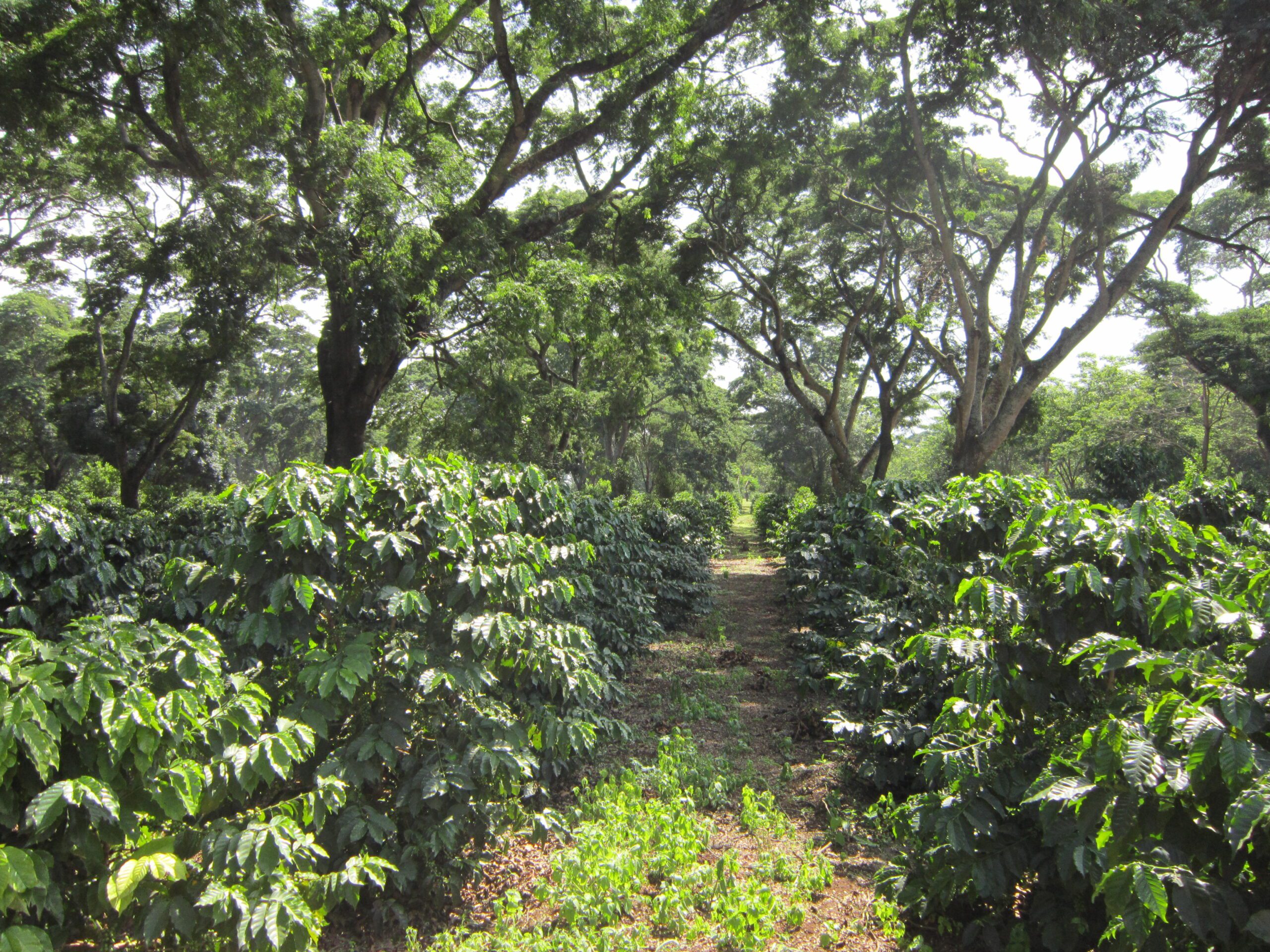
Shade-grown coffee in Tanzania near Kilimanjaro. Photo: cafeafrica.org
Highlighted challenges due to climate change
Coffee production is traditionally rainfed. However, with rainfall patterns becoming less predictable, one possible adaptation measure is to install irrigation systems. “We saw a strong interest in irrigation amongst farmers in Tanzania. Yet irrigation systems rely on complex infrastructure that is not present throughout the regions,” said Grabs. “We also saw that larger plantations were more readily able to install such systems as compared to smallholder farmers.”
Farmers perceive an increase in the occurrence of different pests and diseases as temperatures rise. Grabs said: “To combat negative yield and quality impacts, farmers in some regions of Tanzania increasingly rely on the use of chemical pesticides. This is not only potentially dangerous for their health but also increases input and thereby production costs.”
Coffee prices in recent years reached a historic high due to simultaneous production shortfalls in the two largest producing countries, Brazil and Vietnam, according to the study. “These shortfalls were caused by the worst drought in Brazil in over four decades and simultaneous harvest disruptions in Vietnam due to typhoons and erratic rainfall. Such events are more common as climate change advances, making climate change a threat to the stability of not just the national, but also the global coffee supply,” said Grabs. She mentioned that despite this:
“We still see climate change adaptation treated by coffee industry actors as a corporate social responsibility tissue rather than a core supply security challenge.”
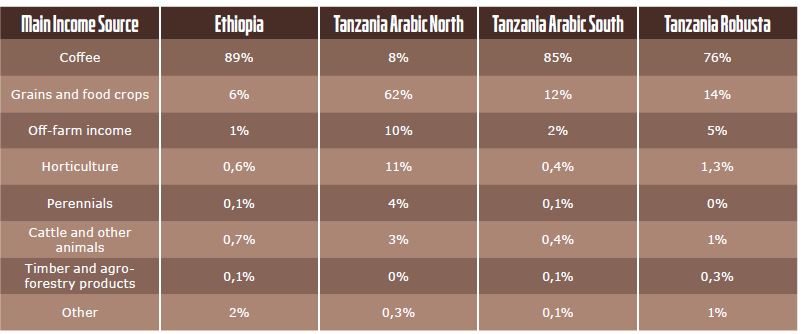
Table 1: Main income sources of surveyed farmers. (Source: Own elaboration)
Climate-smart training for Farmers
PACSMAC calls for greater investments and collaborations with coffee-producing country governments and extension services to scale up farmer training in climate-smart practices. “At the same time, we call on actors in the development space and beyond to reinforce a focus on livelihood resilience and farmer focused adaptation, including an open discussion over whether other crops or livelihood avenues might be less risky and more successful for certain communities,” Grabs said.
Regarding PACSMAC’s continued involvement in raising awareness about and providing suggestions for combatting the devastating effect of climate change on the coffee industry, Grabs said that they’ve recently concluded closing workshops with academics and policy stakeholders in both Tanzania and Ethiopia. The next planned step is to also disseminate our findings to the farming communities involved.

Tanzanian coffee farmers are experiencing the effects of climate change on their crops.
Photo: coffeeandclimate.org
“Before our project ends in March, we will also finalise a teaching case that can be used in business and public policy schools to teach students about these important challenges. Finally, we look forward to engaging even once the project is formally over.
“For instance, our partner university, Jimma, has invited us to collaborate on an input based on our findings to be presented in the context of COP32, which will be held in Addis Ababa – the first COP in 16 years on the African continent,” Grabs concluded.
The United Nation’s COP32 climate summit will take place from 8 to 19 November 2027. For more information on the effects of climate change on coffee farming in Tanzania and PACMACS’ research into this phenomenon and their continued efforts to support farmers in improving their farming practices and finding alternative income sources, send an email to Janina Grabs at janina.grabs@unibas.ch
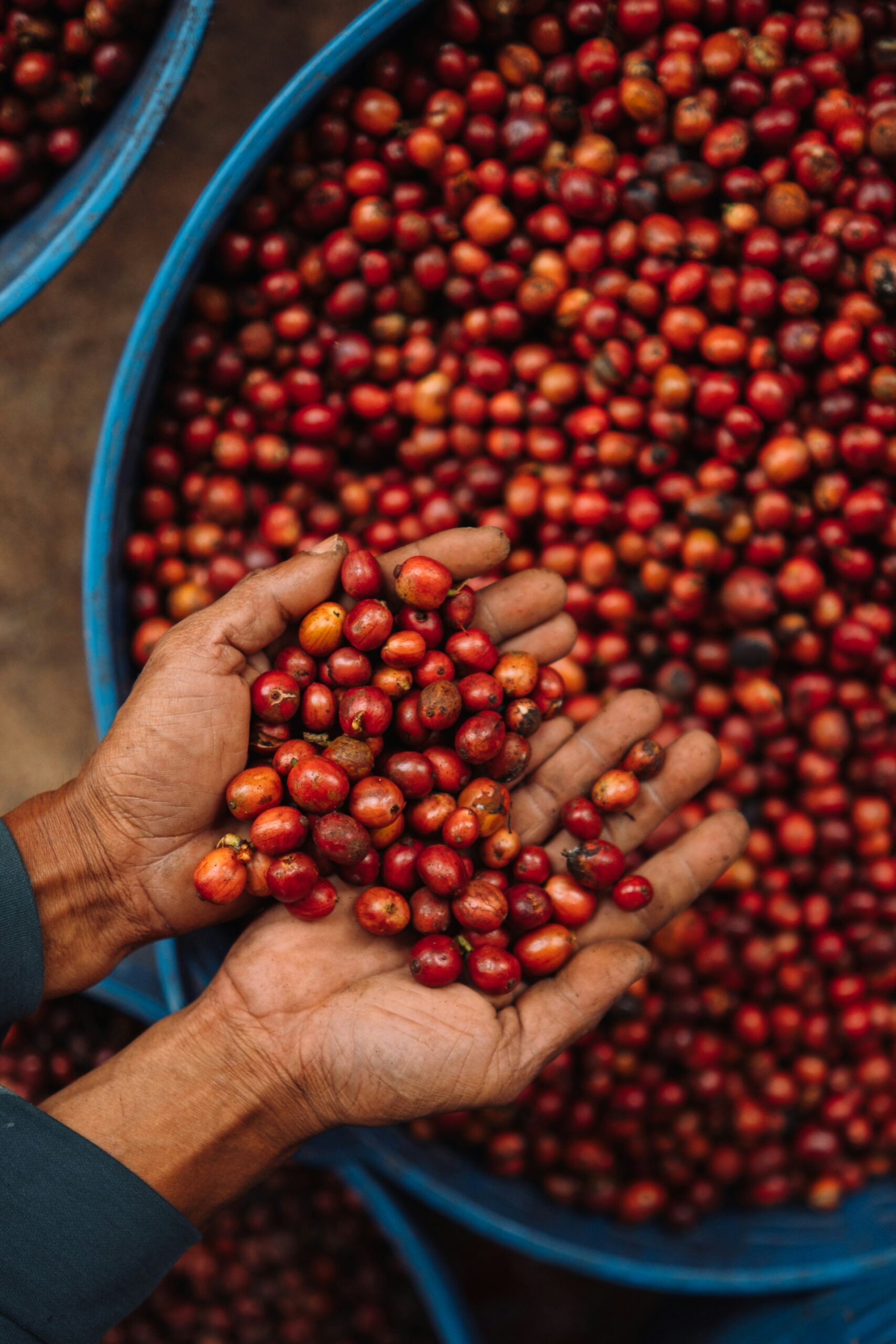
Coffee Berry. Photo: George Dagerotip
Sources:
Africa: Tanzania Emerges as Africa’s Certified Coffee Leader AllAfrica. https://allafrica.com/stories/202602120278.html
Grabs, J. et al (2026) Resilience of what and for whom climate change mitigation and adaptation in the global Ethiopian and Tanzanian coffee sectors https://www.researchgate.net/publication/399059519_Resilience_of_what_and_for_whom_
Climate_change_mitigation_and_adaptation_in_the_global_Ethiopian_and_Tanzanian_coffee_sectors#pf1
Related Posts