Namibia News: UAE company’s investment to boost date production, job creation

kharas
The Namibian government has welcomed a major agricultural investment in the //Kharas Region, where Warifo Investment, a company based in the United Arab Emirates (UAE), has invested N$500 million in the Green Agricultural Initiative for Development and Investment (GAIDIP) Oasis Agricultural Project.
The initiative is expected to transform date production in the country while creating thousands of jobs and strengthening national food security.
Prime Minister Tjitunga Elijah Ngurare, speaking at the inauguration on behalf of President Netumbo Nandi-Ndaitwah, said the project marks a significant step toward agricultural modernisation and economic diversification.
The first phase of the project has already created more than 300 jobs, with employment expected to surge to 1 200 as expansion continues. At full capacity, the development is projected to support approximately 3 000 workers, offering sustainable economic opportunities for communities in the region.
Ngurare said the company will plant an initial 60 000 date palms, with plans to expand to 600 000 trees within five years through its own offshoots. Once operational, the farm aims to produce 5 000 metric tonnes of dates every year, a volume that would position Namibia alongside major date producers such as Chile and Peru.
More than 12 000 trees have already been planted, supported by a comprehensive smart irrigation system designed to service over 140 hectares.
Preparations for additional high-value crops are underway, transforming the area near the Orange River into a productive agricultural hub. Besides dates,, Warifo intends to grow a variety of high-value crops, such as potatoes, onions, butternut, sweetcorn, pomegranates and grapes.
Ngurare emphasised that such an investment plays a critical role in strengthening food security, warning that no nation can be fully sovereign if it cannot feed itself.
“A nation that cannot feed itself lives at the whims of those who feed it,” he said, noting that the partnership between government and the private sector is vital for job creation and long-term stability.
Following the UAE’s lead
Ngurare praised the UAE’s National Food Security Strategy 2051, saying Namibia can learn from its focus on boosting local food production through innovation and technology.
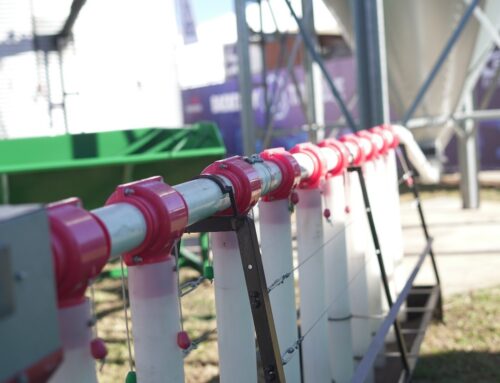
In the same spirit, the GAIDIP project incorporates modern, climate-smart systems, including advanced automated irrigation technology powered by renewable energy.
These systems, Ngurare said, support Namibia’s NDP6 goals, which aim to modernise agriculture, strengthen value chains and enhance national resilience.
He added that the irrigation technology piloted at GAIDIP could serve as a model for similar developments along the Kunene, Kavango and Zambezi rivers, which are areas with the potential to become high-output agricultural zones.
Bold leadership
“Through this project, Warifo Investments has demonstrated bold leadership by mobilising private capital for rural development and high-value production,” Ngurare said. “Their mission to position Namibia as a competitive exporter of premium dates and grapes boosts national revenue and helps integrate Namibia more strongly into regional and international markets.”
Warifo Investment General Manager Husam Elshafei described the project as a “completely unique design”, highlighting that the first phase alone carries an infrastructure value of more than N$450 million.
Ngurare noted that this investment comes at a crucial time, as Namibia works to reduce its dependency on imported food, strengthen national self-sufficiency and build a resilient agricultural sector.
He concluded that strong public-private partnerships, such as this one with Warifo, are essential for driving Namibia’s economic transformation. “These partnerships reduce pressure on the national budget, create jobs, attract investment and enhance long-term sustainability,” he said.
The //Kharas region is the southernmost and least densely populated area in Namibia. This region consists of Keetmanshoop as its capital, and including the towns of Karasburg, Lüderitz and Oranjemund, while Aroab, Berseba, Bethanie, Koës and Tses are self-governed villages.
The region is demarcated into seven constituencies, namely Keetmanshoop Urban, Keetmanshoop Rural, Berseba, Karasburg West, Karasburg East, Lüderitz and Oranjemund.
The region boasts world-renowned tourist attractions, including the hot water springs at Ai-Ais, Warmbad and /Ganigobes, the Kokerboom Forest near Keetmanshoop, and the Fish River Canyon – the largest canyon in Africa.
Source references
Klukowski, S. (2022) //Kharas: The jewel of Namibia New Era Live https://neweralive.na/kharas-the-jewel-of-namibia
PM Ngurare inaugurates N$500 million Gaidip Oasis agricultural project. (2025) NBC Online https://nbcnews.na/node/113938
UAE firm invests N$500m in Namibia date project creating 1 500 jobs (2025). The Brief. https://thebrief.com.na/2025/11/uae-firm-invests-n500m-in-namibia-date-project-creating-1500-jobs/
Related Posts