NAMIBIA NEWS: Charcoal burners warned to be vigilant

charcoal 1
The Namibian charcoal industry provides an income for more than 14 500 people, especially in rural areas of the country. (Source: https://thebrief.com.na/2024/11/charcoal-industry-creates-over-14000-jobs-in-namibia/)
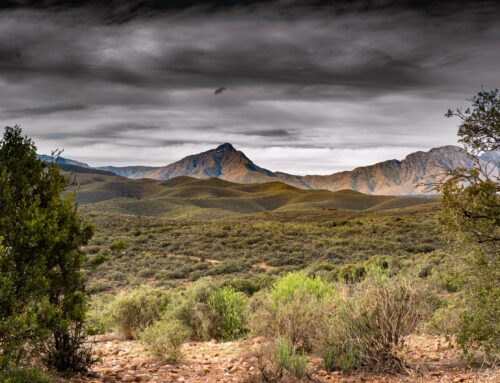
Many parts of Namibia were blessed with exceptional rainfall during the 2024/25 season. As a result, the veld is lush, and the dams are full.
However, as the country is entering the dry season during winter, millions of hectares of rangelands countrywide are drying out and the huge amount of biomass is creating a very real fire risk. This is particularly worrisome for farmers who depend on these rangelands for grazing for their livestock.
The Charcoal Association of Namibia (CAoN) was founded in 2016 to formalise and strengthen the Namibian charcoal industry, supporting the sustainable management of bush encroachment.
Formerly known as the Namibia Charcoal Association (NCA), the Charcoal Association of Namibia (CAoN), is a non-profit voluntary membership association for the Namibian charcoal industry from producers and processors to suppliers and all other stakeholders, with the aim of growing the sector in a responsible and sustainable manner. This is done by means of rules, regulations and guidelines to strengthen the sector.
CAoN’s mission is to promote charcoal products that adhere to internationally acceptable standards, processes and production procedures, and uplifting the industry by providing training and technology development.
A set of guidelines was published in the latest newsletter of the Namibian Agricultural Union. It is of great importance for charcoal burners to adhere to these crucial guidelines.
Failure to do so may lead to non-granting of a harvesting permit as per the forest regulation 8 (3-7) of the Forest Act, No12 of 2001, or suspension of harvesting permits by the director of Forestry in accordance with the section. 34 (3) of the forest Act, No 12 of 2001. Without a harvesting permit, a charcoal producer will face a loss of income.
Guidelines
The guidelines must be followed all the time. These include:
- All charcoal producing farms must have firebreaks of minimum 5 m and maximum 15 m wide around the camp where the central burn site is located.
- An area of at least 30 m around the outer parameter of the central burning must be cleared.
- If there are no camps, a 5 m wide firebreak must be constructed 200 m away around the cleared central burning site.
- All charcoal producing farms must have firebreaks of minimum 5 m and maximum 15 m wide around the camp where the central burn site is located.
- Kilns must be clustered in the centre of the burning area.
- Fire-fighting equipment, including knapsack sprayers and fire beaters, must be provided at the charcoal production sites at all times.
- Charcoal burners must be trained on basic firefighting before they start charcoal burning.
- All neighbours must be informed before charcoal production starts.
- All access roads within the camps must be accessible and gates unlocked before charcoal burning starts.
- Protected tree species must not be harvested, unless special authorisation has been granted by the director’s office.
- No tree bigger than 18 cm diameter at breast height (DBH) should be harvested.
- Burning kilns must be guarded at all times.
In short, the most important principle is to manage and control the area where charcoal is burned.
The charcoal burners must be grouped in a central area and burn the wood together. It is crucial for kilns to be watched all the time and not be left unattended while an active fire is burning.
A person who contravenes or fails to comply with any of the regulations or any condition on the harvesting permit or the above-listed guidelines, commits an offence and will be liable for prosecution under Forest Act No 12 of 2001.

CAoN offers field days and training to ensure that charcoal burners adhere to safety measures, especially during the dry season when Namibia is prone to wildfires that can destroy vast tracks of rangeland. (Source: https://caon.com.na/services/)
More about Namibia’s charcoal industry
Diverse vegetation, including hardwood trees like acacia, terminalia and commiphora, the primary sources of charcoal, and the semi-arid climate. large-scale wildfires, which is important in a country where dry conditions and high temperatures make wildfires a significant threat.
Furthermore, charcoal production contributes to carbon sequestration as the process of turning wood into charcoal locks carbon into a stable form, preventing it from being released into the atmosphere as carbon dioxide (CO₂).
Namibian charcoal is recognised globally for its excellent quality because of its uniform size, clean-burning properties, low ash content, minimal smoke emissions, and high burning efficiency. These qualities make it ideal for household heating, grilling, and even industrial applications.
As a result of the high quality and sustainability of the industry, Namibian charcoal is popular in international markets, with European countries, including the United Kingdom, France and Germany, as well as Asian and African countries, are increasingly importing Namibian charcoal.
The charcoal industry thus plays a significant role in Namibia’s economy by providing employment to thousands of people, especially in rural areas.
Jobs are created in the harvesting, processing, and distribution sectors, as well as in the transportation of charcoal to international markets. In addition, it has a ripple effect on local economies, supporting livelihoods in communities that are dependent on agriculture, forestry, and related services.
It also directly benefits local landowners involved in the harvesting and production process, for which charcoal production is often a primary source of income. According to the Charcoal Price Discovery Platform Final Report, the sector created about 14 500 direct and indirect jobs in the charcoal value chain.
The report also found that more than 30 million hectares of Namibian rangeland suffer from bush encroachment. “Selective bush harvesting for charcoal production offers a dual benefit by restoring valuable grazing land and providing farmers an income source,” it noted.
The report also noted that Namibia produces about 200 000 tonnes of charcoal annually, with exports contributing approximately US$78,1 million in 2022.
Contact CAoN at info@caon.com.na or +264-67-304 -220 or visit the website at https://caon.com.na/
Source references
Charcoal industry creates over 14 000 jobs in Namibia (2024) The Brief. https://thebrief.com.na/2024/11/charcoal-industry-creates-over-14000-jobs-in-namibia/
Namibian Agricultural Union Newsletter 20 Junie 2025. https://mcusercontent.com/e4d3c22d26728a5c0b2518283/files/428c2a02-c4ec-fcc6-58ff-d98773234a2a/Charcoal_NAUnews_20June2025.pdf?utm_source=NLU+%7C+NAU+members&utm_campaign=e6bfa61007-EMAILCAMPAIGN_weeklynewsletter-20-june-2025_COPY_0&utm_medium=email&utm_term=0_bd6124c988-e6bfa61007-549248013&ct=t(EMAILCAMPAIGN_weeklynewsletter-20-june-2025_COPY_0)
Why Namibia’s Charcoal Is the World’s Best. (2025) Namibia Today. https://namibiatoday.com/why-namibias-charcoal-is-the-worlds-best/
Related Posts