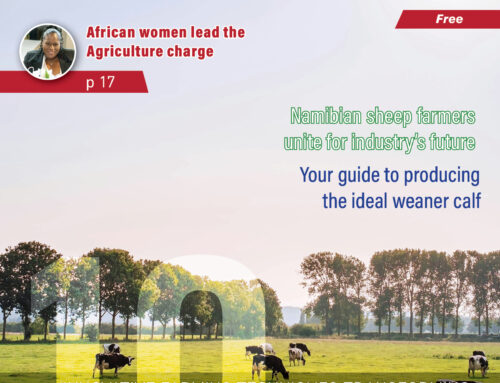
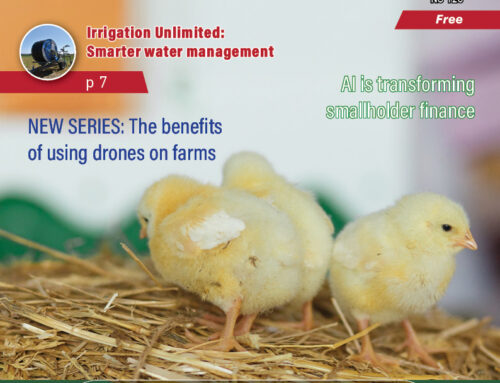
ProAgri BNZ 07

PA BNZ_07_Cover
COVID-19: Can agriculture help with a cure? The medical industry is scrambling to develop a vaccine for COVID-19. They are under severe pressure and are fighting against time because the death toll rises and the whole world is looking at them with desperation.
It is extremely difficult to develop a new vaccine for a novel virus strain, because there is very little to work with until enough information is gathered, and models are built to understand the behaviour of the virus. This takes a lot of time and we might only see a vaccine after a year. In the news we are already seeing how people are speculating and desperately clutching at straws.
But maybe the agricultural industry can help. British American Tobacco (BAT) announced that they are working on a potential vaccine through a US biotech subsidiary. BAT’s US biotech subsidiary, Kentucky BioProcessing (KBP), is developing a potential vaccine for COVID-19 and is now in the pre-clinical testing phase. If testing goes well, BAT is hopeful that, with the right partners and support from government agencies, between one and three million doses of the vaccine could be manufactured per week, beginning in June.
KBP recently cloned a portion of COVID-19’s genetic sequence which led to the development of a potential antigen − a substance which induces an immune response in the body and in particular, the production of antibodies. This antigen was then inserted into tobacco plants for reproduction and, once the plants were harvested, the antigen was then purified, and is now undergoing pre-clinical testing.
A new, fast-growing tobacco plant technology is used. Tobacco plants offer the potential for faster and safer vaccine development compared to conventional methods. Tobacco has several advantages: It is potentially safer given that tobacco plants can’t host pathogens that cause human disease. It is faster because the elements of the vaccine accumulate much quicker in tobacco plants – 6 weeks in tobacco plants versus several months using conventional methods.
The vaccine formulation that KBP is developing remains stable at room temperature, unlike conventional vaccines that often require refrigeration. It also has the potential to deliver an effective immune response in a single dose.
While KBP remains a commercial operation, the intention is that its work around the COVID-19 vaccine project will be carried out on a non-profit basis.
We are still in lockdown to reduce the spread of the virus. Therefore, please stay home as much as possible and rather read our ProAgri magazines. WhatsApp your name, surname, country, main agricultural activity and email address to +27(0)84-041-1722 to receive the magazine on WhatsApp. It will require less than 15 MB per issue.
Farm smartly!
Du Preez de Villiers – dupreez@proagri.co.za
Related Posts