Plan ahead: Strategise success

pexels-singkham-1108572
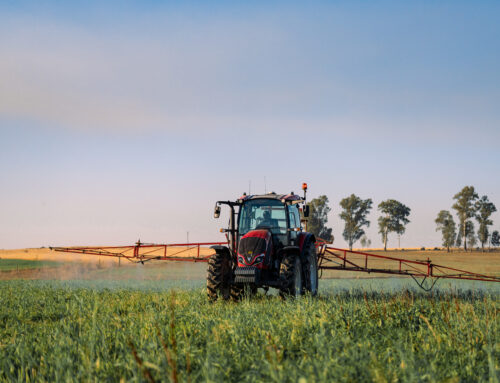
Planning ahead is key to guaranteeing success in meeting goals and making a profit (Source: Pexels)
Now, more than ever, agricultural production requires farmers to fully understand all aspects of their production systems, ensuring that they are meticulous in gathering and compiling all the relevant details. Farming now requires a holistic approach that covers aspects such as the farm company structure, goals and objectives, industry analysis, ownership and management structure, market analysis, operational and financial plans.
Production also now requires farms and firms to incorporate various disciplines into their systems, such as agricultural, electrical, industrial, irrigation, hydrological engineering, agronomy, human resources, veterinary science, information technology, business management and accounting, meteorological and marketing knowledge.
Farm company structures can be divided into the following groups: sole proprietorship, limited liability company (LLC), partnership, corporation, or co-operative. The farm company structure that is used will determine how operations are undertaken and how decision-making is executed.
Most farmers in Africa usually function as sole proprietors or limited liability companies, occasionally entering into partnerships. In developing countries, there is a growing interest from governments, non-governmental organisations, and the private sector to partner with farmers as agriculture is now growing and these entities are seeking ways to increase their country’s gross domestic product (GDP) and options for earning foreign currency.

Goals and objectives of the farming activities must be SMART:
• Specific
• Measurable
• Achievable
• Realistic, and
• Timely
The lack of clarity when it comes to farming operations usually leads to underperformance or losses and debt. Objectives are the specific actions and measurable stages needed to be taken to achieve a goal. Objectives are the activities a farmer performs within a certain time frame.
The industry analysis in the sphere of operation of the farm aids a farm/ company to comprehend its position relative to other companies within that industry that produce similar products or add value to the produce. This also aids the start-up or expanding farm to scale up their production systems to meet the standards set by other farms and firms in that industry, thereby improving competitiveness and market-ability of the farm products.
Ownership and management structures have more to do with the internal organisation of a business entity and the rights and duties of the individuals holding a legal (appointed) or equitable interest in that business. Usually, the managing director or farm owner decides how the business must be structured. Where this is challenging, the managing director or farm owner can engage a consultant or seek advice from other experienced farmers/companies.
The quantitative and qualitative assessment of a market is known as the market analysis. This discipline assesses the size of the market both in volume and in value, the various customer segments and buying patterns, the competition, and the economic environment in terms of barriers to entry, and regulation. This is one of the most important parts of preparation that needs to be covered as this can make or break the farm.
One of the key aspects to fundamentally explore during the market analysis, is statistical analysis of past and present performance of produce prices. From the observed trend, forecasts of produce pricing are made to determine the best time to plant in order to maximise profitability of the farming enterprise. The operational plan is a practical document which outlines the key activities and targets a farm will undertake during a period of time, usually one year. It is often linked to funding agreements as well as being linked overall to the farms strategic plan.
The operational plan must be accessible and flexible. Changes in the agricultural sector may arise and the farm must be ready to make changes to adapt accordingly as soon as possible. The plan must also be accurate, objective, and relevant with a high level of detail.
The financial plan is a comprehensive picture of finances. It may include details of past, present, and forecasted performance. Good financial planning should include particulars such as cash flow, balance sheets, income statements, savings, debt, investments, assets, insurance, and any other financial elements of the farm/business. When a financial institution, investor or potential business partner has an interest in the business, the financial plan is the main part of the business that determines if the venture to be pursued is profitable, viable and a risk worth taking.
In all planning, it is important to remember that Covid-19 has reduced the spending capacity of most individuals, thus high-end produce — depending on the market to be supplied — may not be bought, nor be as high in demand as before Covid-19.
Adherence to the comprehensive farm plan will to a large extent guarantee that project goals and maximum profitability are achieved.
Related Posts