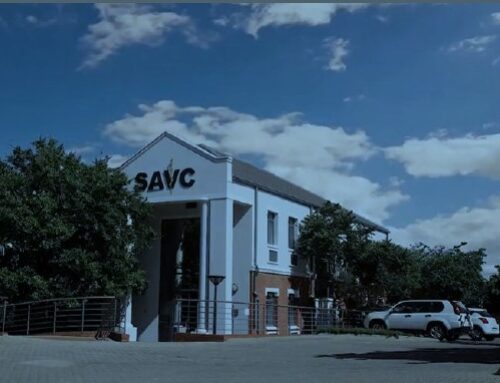
Full bench on appeal finds in favour of respondents after a lengthy court battle

eggs in a basket
The case brought before the High Court of Pretoria between key role players (producers and representatives) inter alia the egg industry and the Department of Agriculture Land Reform and Rural Development as well as the Assignee, the court a quo and three judges on appeal initially found in favour of the Assignee as per the judgement of Judge Davis as delivered on the 6th of March 2020. The trial court refused the leave to appeal on the 5th of June 2020.
However, after the petition to the Supreme Court of Appeal, the Appellants’ leave to appeal to a full bench was granted on the 26th of August 2020 to the Pretoria High Court, against the judgement by Justice Davis. The appeal also pertained to the appointment of an Assignee by the Minister as well as the powers granted to such Assignee, including its right to insect the produces and representatives in the egg industry.
Food Safety Agency (Pty) Ltd as one of the Respondents in the case, is an Assignee appointed by the Department of Agriculture, Land Reform and Rural Development (DALLRD) (also a Respondent in the case) in terms of the Agricultural Product Standards Act, 119 of 1990 (APS Act) to enforce the quality regulations applicable to Poultry Meat (R.946 of 27 March 1992), Eggs (R.345 of 20 March 2020) and any other meat and meat products, and specifically Processed Meat Products (R.1283 of 4 October 2019).
The Appellants in the case sought relief from the Appeal Court, primarily related to the powers granted by the Minister in terms of the APS Act, and most importantly whether the power was assigned to levy fees for the inspection of eggs.
Factual Background regarding the case:
The first appellant, Top Lay, has approximately 50 members who produce eggs that are sold and marketed under the Top Lay name.
They supply eggs countrywide as well as to several large retail groups including, but not limited to Checkers, Woolworths, Pick n Pay, Spar, Massmart, OK, and others. Top Lay markets at least 2 million eggs per month, where their members market, above and beyond the 2 million eggs mentioned, 7.5 million dozen eggs, independently.
There are also several other egg producers countrywide, which includes the second appellant, (George Schwartzel Boerdery (Pty) Ltd), the third appellant, (Eggbert Eggs (Pty) Ltd) and the fourth appellant (WW Bartlett Poultry Farm (Pty) Ltd). These appellants are corporate egg and poultry producing entities.
The Minister of Agriculture Forestry and Fisheries (as it was then called) is the first respondent, the Executive Officer of the second and Food Safety Agency (Pty) Ltd the third.
After a public invitation, inviting all prospective assignees to submit their bids to be appointed an assignee in terms of the APS Act, Food Safety Agency (Pty) Ltd was designated by the Minister as Assignee in terms of section 2(3)(a) of the Act on the 9th of December 2016.
On 19 January 2017, the Executive Officer published in the Government Gazette that the “Agency for Food Safety (Pty) Ltd” had been appointed for the application of sections 3(1)(a) & (b), 3A (I), 4A(I)(a), 7 and 8 of the Act.
Consultations and deliberations with the egg industry started as far back as the 21st of February 2017. Two workshops, one on the 20th of April 2017 and the other on the 4th of May 2017, enabled successful participation as the Appellants were present at these workshops.
It was requested by the industry and accepted that quarterly inspections should be conducted instead of monthly, and fees should be reduced from R0.015 to R0.0006 per egg (for application of the Act and regulation, therefore, no additional costs). The suggested fees were an acceptable manner of calculation and budgeting for inspection costs and the fees were published in the Government Gazette on the 19th of May 2017.
What does the law say and how does it apply to the case?
The purpose of the APS Act is to control the sale and export of certain agricultural products, the sale of certain imported agricultural products and other related products.
The essence of the rule of law is that all administrative authorities must exercise their powers within the confines of the law.
It is evident in the judgement as confirmed on appeal that the Minister did indeed act within his powers to delegate such authority to the designated assignee. The assignee then has to act within the parameters of the authority as delegated, subject to ministerial control.
The APS Act permits the executive officer and a designated assignee to conduct inspections aimed at ensuring that certain agricultural products meet the prescribed classifications and standards.
In the case of the assignee, the Act stipulates in section 3(1A) (b)(ii), that “the fee determined by such assignee shall be payable”. Section 3(1A) permits fees to be charged in respect of the powers exercised and the duties performed by the assignee. Section 3A (4) then requires the owner of the product to pay the fee.
Therefore, the fee that shall be payable, is the fee as determined by an assignee. When an assignee then exercises its power to conduct an inspection, the fee will then become payable.
In terms of Section 3A (1)(b)(c)(d) and (e) an assignee may:
- Classify grade, pack, or market any quantity of a product in accordance with the prescribed requirements;
- Inspect or cause to be tested any quantity of a product; or
- Subject to subsection 2(d) take such samples of a product, material, substance or other article in question as he or she may deem necessary.
The assignee’s powers are however not limited to section 3(1) and 4A as the court agreed with the court a quo in the respect that the assignee also has the requisite authority by necessary implication in terms of sections 2(3)(a), 3(1)(a) & (b), 3A (I), 4A(I)(a), 7 and 8 of the APS Act.
This includes the authority to;
- Enter premises;
- Inspect;
- Sample;
- Grade;
- And to seize (if necessary) any of these agricultural products of any quantity and/or any documents; if Food Safety Agency (Pty) Ltd is concerned or has reasonable grounds to believe that there has been a commission or there is a suspicion of a commission of an offence, evidence of this offence or there is an intention for any product/material/document to be used in a commission of any office.
What does the egg regulation then entail and how is it applied or enforced by the assignee?
The Regulations regarding the Grading, Packing and Marking of Eggs Intended for Sale in the Republic of South Africa (R.345 of 20 March 2020) prescribes requirements for:
- Sizing and trading of eggs;
- Containers and outer-containers;
- Marking requirements; and
- Sampling and examination
To verify these requirements, the assignee conducts inspections on egg products as produced and packaged by producers and/or re-packers. The assignee appoints highly skilled and trained inspectors to conduct these inspections, using the regulations as a base for the inspections.
Inspections take place at various facilities; producers, re-packers, retail stores, butcheries, etc. to ensure continuous high quality of the product throughout the value chain. This enables consumers to get what they pay for.
The inspection findings are captured on detailed and extensive inspection checklists that are provided to the facility after the inspection is concluded.
As technology is drastically forcing companies to improve, Food Safety Agency (Pty) Ltd has developed a software system that will ease the paper burden on, not just the assignee, but the facilities as well, as inspection checklists will be available in real-time and accessible at any moment from any electronic device (provided that you have the necessary access and authority to operate the application). The application will allow the assignee to make the inspection checklists available as soon as it has been released by the assignee (after verification by management).
For the year 2021, Food Safety Agency (Pty) Ltd has conducted 3 705 inspections in total. This includes;
- 1 386 inspections on poultry meat;
- 1 160 inspections on processed meat products; and
- 1 159 on eggs.
A total number of 217 directions were issued for poultry meat in areas such as the abattoirs, retail, and imports. In the processed meat products environment, a total number of 185 directions were issued in facilities such as retail stores and production plants. For the egg commodity, 221 directions were issued. It is evident that eggs are by far the most non-conforming commodity the assignee is responsible to inspect and unfortunately the most resistant to allow inspections.
As can be seen from these pictures, deviations on eggs found on inspection include the faecal matter on eggs (dirty eggs), cracked eggs, eggs that contain blood spots, etc. Deviations are also found in terms of packaging or marking requirements such as an incorrect indication of size or grade, no address of the producer of the eggs, no contact information, etc.


To address such deviations, the assignee issues a direction, which provides the facility with 30 days to correct the deviation(s). If the deviation cannot be corrected within 30 days, it is the responsibility of the facility to apply for a dispensation, to DALRRD.
We believe that the safety and quality of products are now more important than ever. The outcome of the court case will enable Food Safety Agency (Pty) Ltd to broaden its inspection scope in the egg industry to ensure equal and fair participation to the requirements of the APS Act. As poultry and eggs make up approximately 59% (fifty-nine percent) of South Africa’s protein consumption, the need for control in terms of the Act speaks for itself.
We would also like to urge the public to report any findings or complaints to the assignee at (012) 361 1937 or info@afsq.co.za.

Please follow our Instagram, Facebook and LinkedIn pages for more communication and information.
Related Posts